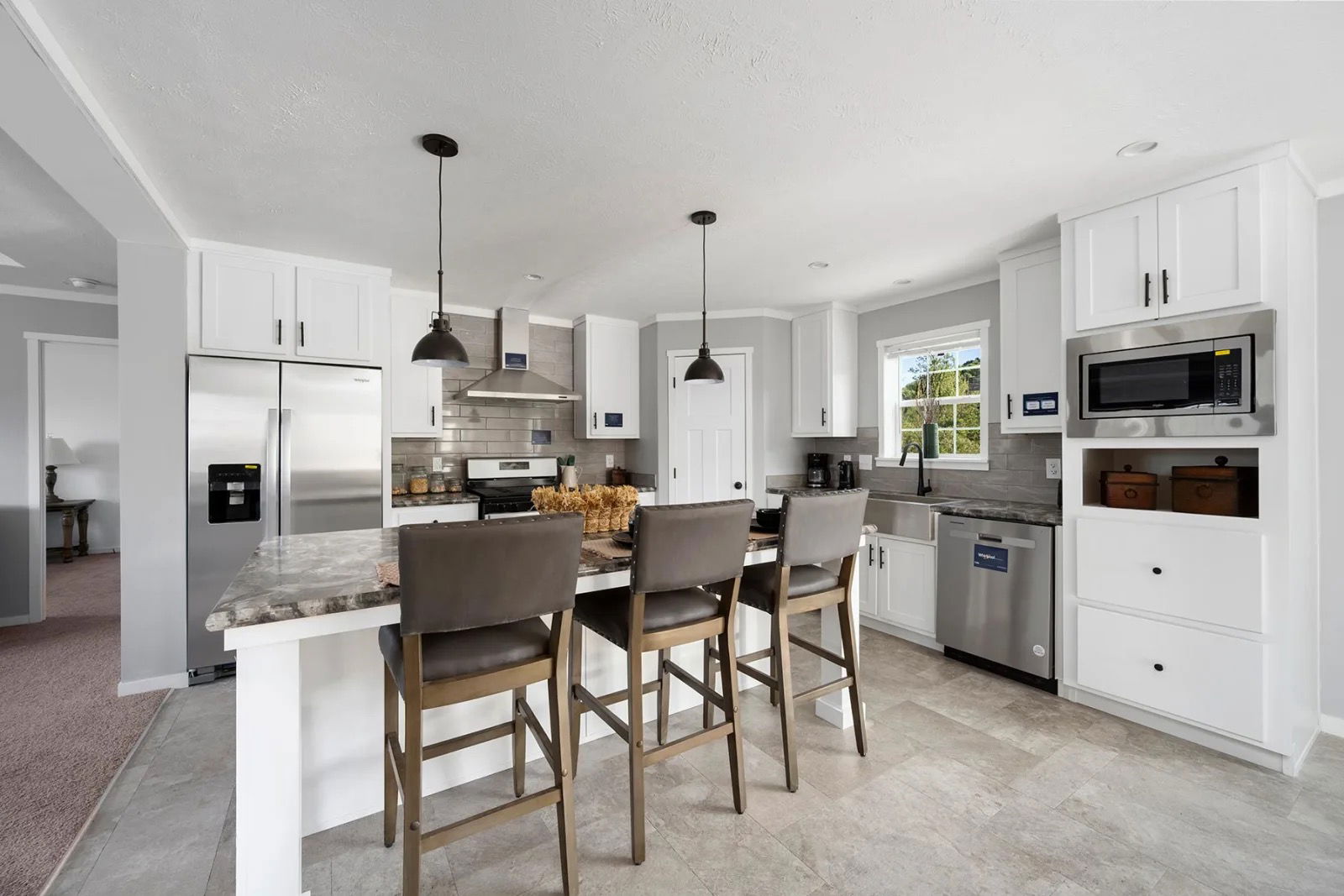
For New England homeowners, living with a dog or cat means planning for snow, mud, wet paws, shedding, and the everyday movement of an active household. The right manufactured home floor plan can make those routines easier without making the house feel like a kennel. Start with the way your pets actually use the home, then look for practical space, durable materials, and a comfortable connection to the yard.
Call (415) 847-0821 to tour pet friendly manufactured homes built around your pets' daily routine.
Pet friendly manufactured homes can be designed around real pet routines. Look for features such as a mudroom for muddy paws and supplies, easy-clean flooring. And a layout that gives pets room to move while keeping shared living areas comfortable.
That flexibility is especially useful in New England, where a thoughtful entry sequence and resilient finishes can reduce daily cleanup through long winters. It also lets you balance pet needs with the style, storage, and gathering spaces your household values. The result is a home that supports your pets naturally while still feeling polished and personal.
Why Are Pet Friendly Manufactured Homes a Smart Choice in New England?
New England living asks a lot of a home. Cold winters keep people and pets indoors for long stretches, while spring mud season can turn the transition from yard to hallway into a daily cleanup routine. On a compact lot, every square foot also needs to work well. A thoughtfully planned manufactured home can address those realities without making the house feel like a kennel or utility space.
Layouts that support everyday pet routines
Customizable floor plans give homeowners more control over how the home handles feeding, resting, storing supplies, and coming in from outside. A mudroom near an entry can create a practical buffer for muddy paws, wet coats, leashes, and boots. A defined pet zone can keep beds, crates, or feeding supplies organized without taking over the main living area.
That flexibility matters especially when the lot is compact. Instead of adding unused square footage, owners can focus on the spaces they will actually use. A well-placed storage area may hold food, toys, grooming tools, and seasonal gear. Easy-clean flooring in high-traffic areas can also make daily maintenance more manageable. These choices support a pet-friendly routine while preserving comfortable rooms for the people who live there. For a deeper look at how these features fit together across house sizes, review our complete guide to manufactured home floor plans.
Materials built for active households
Modern manufactured homes use innovative materials that are designed to be durable and better suited to pet households than some legacy construction materials. The goal is not to eliminate normal wear. It is to choose finishes and surfaces that can handle the ordinary realities of paws, claws, spills, and frequent cleaning.
Durability is particularly useful in a region where winter weather brings salt, moisture, and tracked-in debris. Selecting practical materials in entryways, kitchens, laundry areas, and other busy zones can help the home remain easier to care for through changing seasons. The result is a home that feels finished and welcoming, rather than one that requires constant protection from everyday life.
Comfort for pets and people
Good pet-friendly design balances function with the overall look and feel of the home. A dedicated zone does not need to be hidden, and a mudroom does not need to be an afterthought. With the right floor plan, storage and cleaning features can fit naturally into the way the household moves through the day.
For New England buyers, that combination of customization, durable materials, and efficient use of space makes manufactured homes worth considering. The best plan starts with the household's actual routines, then places pet-friendly features where they solve real problems.
Floor Plan Ideas for Homes With Pets: Mudrooms, Pet Zones, and Wash Stations
The best pet-friendly layouts make daily routines easier without making the home feel like a kennel. In New England, that often means planning for wet coats, muddy paws, food storage, and a place to clean up after outdoor time. A thoughtful floor plan keeps those activities close to the entry and gives pets room to move while preserving comfortable living areas for everyone.
Use a mudroom as the pet transition zone
A mudroom near the main entrance can serve as a practical buffer between the outdoors and the rest of the home. Include a durable surface, hooks or cabinets for leashes and towels, and enough open floor space to wipe paws before a dog heads into the living room. Cabinets, closets, and shelves can also hold pet food, toys, grooming tools, and other daily supplies, keeping them accessible without leaving them scattered across the kitchen or hallway.
For households with multiple pets, consider separate storage for each animal or a low shelf for frequently used items. A bench can provide seating for removing boots while also creating concealed storage below. The goal is not to add a large room for its own sake, but to place high-use functions where they naturally belong.
Plan feeding and washing stations around existing utilities
Built-in feeding stations can give food and water bowls a defined home while reducing clutter in a busy kitchen. A recessed niche, pull-out drawer, or washable counter section may work well, depending on the size and habits of your pets. Keep the station away from the main walkway, and allow enough clearance to refill bowls without blocking cabinets or appliances.
A pet wash station in the laundry room is another useful option. Locating it near plumbing and a utility sink can make installation and cleanup more straightforward. Add storage for shampoo, towels, and brushes, plus a handheld sprayer or a low basin that is comfortable to use. These features are among the specialized pet amenities that can be incorporated into custom manufactured home floor plans, along with built-in feeding areas and dedicated playrooms. Explore designing pet-friendly floor plans around the routines that matter most in your household.
Create a dedicated pet zone without isolating the animal
A pet zone can be as simple as a quiet corner for a crate, bed, toys, and a water bowl. It can also be as generous as a small pet playroom. Choose a location where pets can remain part of household activity while still having a place to rest. Sightlines into a family room or kitchen can help prevent the space from feeling like isolation, while a nearby gate can provide flexibility when guests arrive.
When reviewing layouts, think through circulation, cleaning access, and future needs. A dedicated zone should not narrow a hallway or compete with a required storage area. By combining a practical entry, organized supplies, and a well-placed wash or feeding station, your home can support pet care naturally from the day you move in.
What Is the Best Pet-Proof Flooring for New England Homes?
Flooring has to handle more than everyday foot traffic in a pet-friendly manufactured home. Wet paws, tracked-in grit, spilled water, claws, and occasional accidents all put pressure on the surface. In New England, that challenge is especially noticeable during snowy or rainy seasons. Choosing a material that is durable and straightforward to maintain can help protect the look and function of your home without making every cleanup a major project.
Luxury vinyl plank, laminate, and ceramic tile are practical options to discuss during the design process. LVP and laminate are described as resistant to scratches, moisture, and stains from active pets. While ceramic tile and high-quality vinyl are commonly recommended for pet-friendly interiors because they are durable and easy to clean. The best choice depends on where the flooring will be installed, your preferred look, and how much maintenance you want to handle.
| Flooring option | Durability for pets | Ease of cleaning | Relative cost |
|---|---|---|---|
| Luxury vinyl plank | Resists scratches, moisture, and stains; a strong choice for active pets. | Simple to sweep and wipe, making it useful in entry areas, kitchens, and living spaces. | Moderate, depending on the product and installation. |
| Laminate | Scratch-resistant and suitable for everyday pet activity when moisture exposure is managed. | Easy to clean with routine sweeping and careful damp mopping. | Often a budget-conscious option, with cost varying by finish and quality. |
| Ceramic tile | Hard and highly durable, with good resistance to claws and regular wear. | Easy to sweep and mop, especially in mudrooms and other high-use areas. | Higher upfront investment may be appropriate where long service life is the priority. |
Use the table as a starting point rather than a substitute for a room-by-room plan. LVP can create a consistent look across open living areas, while tile may make sense in a mudroom where melting snow and muddy paws are common. Laminate can suit lower-moisture rooms when its care requirements match your household routine. Ask about seams, transitions, underlayment, and cleaning recommendations before making a final selection.

Durable flooring can also support long-term value by reducing the likelihood of damage, waste, and frequent replacement. During a floor-plan discussion, review pet-friendly features for floor plans alongside flooring choices so storage, entrances, and high-traffic paths work together. If a single-wide layout suits your budget and lifestyle, our guide to manufactured home floor plans shows how pet-friendly touches fit into a compact footprint. The result should be a home that accommodates pets naturally while still feeling comfortable and finished for everyone.
Indoor-Outdoor Access and Fenced Yards for Dogs
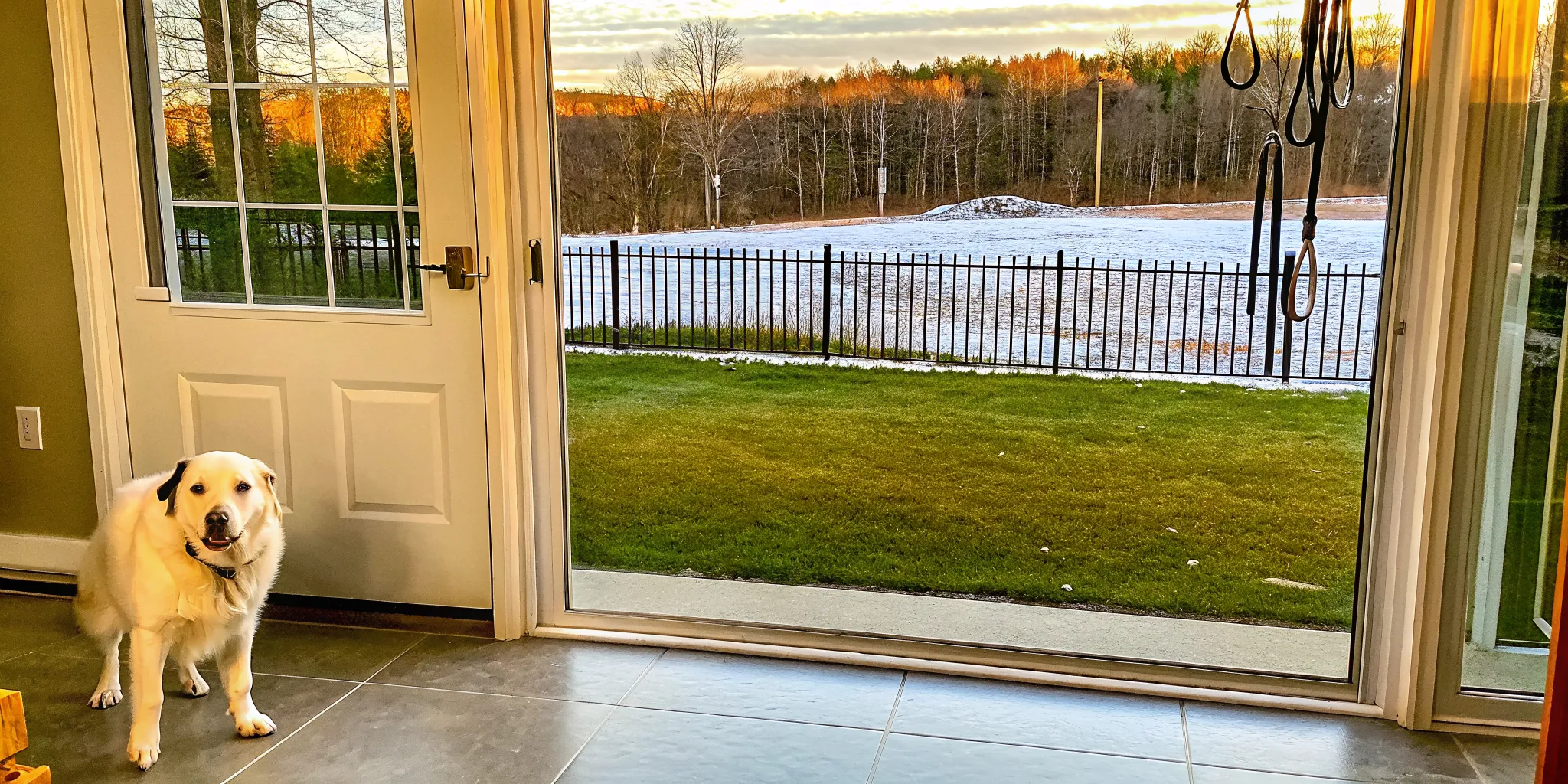
For dogs, a well-planned connection between the living area and the yard can make daily routines easier in every season. In New England, that connection should account for snow, mud, changing temperatures, and the practical need to supervise outdoor time. The goal is not simply to add a door or fence. It is to create a controlled path that supports exercise while protecting floors, furnishings, and the household's rhythm.
- Choose the best room for yard access. Start by identifying the room that naturally connects to the planned outdoor area. A kitchen, dining space, or family room can provide convenient visibility and a direct route outside. Sliding-glass patio doors are especially useful because they create a seamless transition between indoor and outdoor spaces while allowing owners to monitor pets in the yard.
- Plan the fenced yard around safe movement. Position the fence so your dog has room to move without creating an awkward route around the home. Consider where the gate will open, how visitors will enter, and whether snow storage or seasonal maintenance could narrow the usable area. The fence should work with the home's orientation and the site's natural circulation, rather than forcing people and pets through the same tight passage.
- Add a controlled transition at the door. A pet gate can separate the patio door from the rest of the home when the door is open, during deliveries, or while guests are arriving. It also gives owners a simple way to manage access without turning every outdoor trip into a chase. Place the gate where it will not interfere with kitchen work, furniture placement, or the main walking path.
- Build in a place to handle paws and weather. The indoor side of the transition should lead toward a mudroom, laundry area, or other easy-to-clean zone when the floor plan allows. Keep towels, leashes, waste bags, and grooming supplies within reach. A defined landing area helps contain wet or muddy paws before a dog reaches living spaces, which is particularly valuable after rain or snow.
- Review the entire floor plan before finalizing details. Check that the patio door, fence, pet gate, storage, and furniture locations work together. The best arrangement keeps outdoor access visible, limits unnecessary crossings through the home, and preserves comfortable space for people. During a design consultation, discuss how the yard and entry sequence will support your dog's habits without compromising the home's appearance or everyday function.
A thoughtful indoor-outdoor layout gives dogs useful freedom while giving owners clear control. It also makes the home easier to live in when New England weather turns the yard into a source of mud, moisture, or tracked-in debris. When your pet's needs point to a roomier footprint, compare energy efficient manufactured homes to see how efficient designs fit larger layouts without higher operating costs.
How Do Pet Friendly Manufactured Homes Work With Community Pet Policies?
A pet-friendly home has to work beyond the walls of the house. Before choosing a manufactured home community, ask for its current pet policy and review the community rules in writing. Policies may address the number or size of pets, breed restrictions, registration, vaccination records, leash requirements, fencing, nuisance concerns, and where pets may be walked. If the community has an HOA or similar association, confirm whether its rules add requirements for yards, exterior improvements, sheds, gates, or visible pet equipment. Rules can vary by community, so do not rely on a general assumption that a feature will be permitted.
Questions to ask before you choose a community
- Are dogs, cats, and other household pets allowed, and are there limits on number, size, or breed?
- Are fenced areas, dog runs, pet doors, or other exterior changes permitted?
- Where can residents walk pets, and how are waste disposal and leash rules handled during winter?
- Are there quiet-hour or nuisance provisions that could affect barking, visiting pets, or shared outdoor spaces?
- Will the rules change if you add another pet later?
Bring these questions to the sales or community management team before making a purchase decision. It is also wise to ask how snow, mud, and shared paths are handled in colder months, since New England weather can make everyday pet care more demanding.
Design a practical transition zone
Inside the home, place the pet zone where daily routines naturally occur without obstructing the main traffic path. A mudroom near an entry can create a useful transition from the driveway or walkway to the living areas. It can hold food, toys, leashes, towels, grooming tools, and cleaning supplies, while giving muddy paws a place to be managed before a pet reaches finished flooring. Dedicated storage for pet supplies is a practical mudroom use identified in manufactured home planning research on pet-friendly home features.
Plan cleaning access at the same time. A washable mat, nearby water source, durable surfaces, and enough room to turn around with a wet or reluctant dog can make the entry far more useful. Keep food storage secure and separate from household chemicals. If you use a crate, choose a location that feels connected to the household but is not in a drafty doorway, narrow hall, or loud utility area. Leave enough clearance to open the crate and clean around it without moving furniture.
Balance function with the look of the home
Pet-friendly design should support an animal's habits while preserving a comfortable, finished appearance. Furniture placement, room layouts, and material choices all affect how pets and people share a space, according to interior design research on balancing style and function. Consider sightlines, nap areas, feeding traffic, and access to the door before finalizing the plan. With thoughtful placement, a crate, feeding station, or storage cabinet can feel intentional rather than added later. The goal is a home that accommodates real pet behavior while remaining easy for the whole household to use.
Ready to see pet friendly manufactured homes in person? Call (415) 847-0821 to book a tour.
Frequently Asked Questions
What features make manufactured homes pet-friendly?
Pet-friendly features combine easy maintenance with thoughtful daily routines. Durable flooring, practical storage, open circulation, and a defined place for food, toys, or grooming supplies can make life easier. A mudroom is especially useful in New England, giving muddy paws and wet coats a transition area before pets enter the main living space.
Are manufactured homes a good choice for pet owners?
They can be an excellent choice when the floor plan and finishes match your pets' habits and the household's space. Customizable layouts let owners add a mudroom, wash station, or quiet pet zone, while durable materials hold up to claws, spills, and snowy weather. Because buyers can tailor these details from the start, a manufactured home can feel designed around a pet rather than simply tolerated.
How can I customize a floor plan for my pets?
Most New England manufactured home dealers let you adjust room placement, storage, finishes, and entry points during the design phase. You might add a pet wash station near plumbing, choose durable flooring in high-traffic zones, or plan a mudroom next to the main entrance. Tell your design team how your pets move through the home so they can place these features where they will help most.
What flooring is best for pets in New England manufactured homes?
Luxury vinyl plank and laminate are popular because they resist scratches, moisture, and stains while staying easy to clean. Ceramic tile is a highly durable option for mudrooms and entry areas where melting snow and muddy paws are common. Your choice should balance pet needs, room location, maintenance habits, and budget.
Do pet-friendly manufactured home communities exist in New England?
Many manufactured home communities welcome pets, but policies vary by park and by association. Before choosing one, review the written rules on the number and size of pets, breed restrictions, leashing, fencing, and where pets can be walked. Asking directly is the only reliable way to confirm that a community fits your household.
Ready to Schedule a Tour?
Seeing pet friendly manufactured homes in person can make it easier to picture how a mudroom, durable flooring, or a flexible pet zone could fit your household. To discuss floor plans and schedule a tour of pet friendly manufactured homes across New England, call (415) 847-0821. Our design team can walk you through layouts and finishes that suit both your family and your pets.

Northern Mobile Homes NH
Northern Mobile Homes stands out as New Hampshire’s best option for manufactured homes, thanks to our unbeatable combination of exceptional service, affordable prices, and a vast selection. Visit us today to experience why local homebuyers consistently choose New England Mobile & Manufactured Homes as their trusted home dealer. New England Mobile & Manufactured Homes is the best choice for your manufactured or mobile home in Rochester, NH.
Get started with Northern Mobile Homes NH
Find, design, and order your next home in a few clicks.
Dealer License #: