Energy Efficient Manufactured Homes: What to Look For
What to look for in an energy-efficient manufactured home
When comparing manufactured homes, look beyond the floor plan and finishes. The details behind the walls can shape monthly utility costs, indoor comfort, and long-term affordability. Especially for first-time buyers managing a tight budget or downsizers planning around a fixed income.
Energy efficient manufactured homes combine a well-insulated, carefully sealed building envelope with efficient heating and cooling equipment, quality windows, and verified construction standards. Start by asking for insulation details, equipment ratings, certification information, and documentation of the home's energy features rather than relying on a general efficiency claim. Modern homes are built under the federal HUD Construction and Safety Standards, and the U.S. Department of Energy notes that buyers can also select high-efficiency systems and ENERGY STAR appliances. Review the Department of Energy guidance as you compare options.
A useful tour begins with the building envelope, because insulation and air sealing influence how effectively every other efficiency feature performs. Here is what to examine in the walls, floors, ceiling, and related assemblies.
Insulation and the Building Envelope: What Modern Manufactured Homes Use
Insulation is one part of a manufactured home's building envelope, the connected system of floors. Walls, ceilings, windows, doors, and air-sealing details that separates the conditioned interior from outdoor temperatures. When these parts work together, the heating and cooling system does not have to work as hard, rooms feel more consistent, and energy costs are easier to manage. For buyers comparing energy efficient features in manufactured homes, the envelope is a useful place to start.
What the insulation levels mean
Insulation performance is commonly described with an R-value. A higher R-value generally means greater resistance to heat flow, although the home's full design and installation quality also matter. In HUD Climate Zone 2 examples, modern manufactured homes typically use R-19 to R-21 insulation in floors, R-13 to R-19 in walls, and R-30 or higher in ceilings. These ranges are reported by Lee Corporation in its overview of manufactured-home insulation standards: manufactured-home insulation R-values.
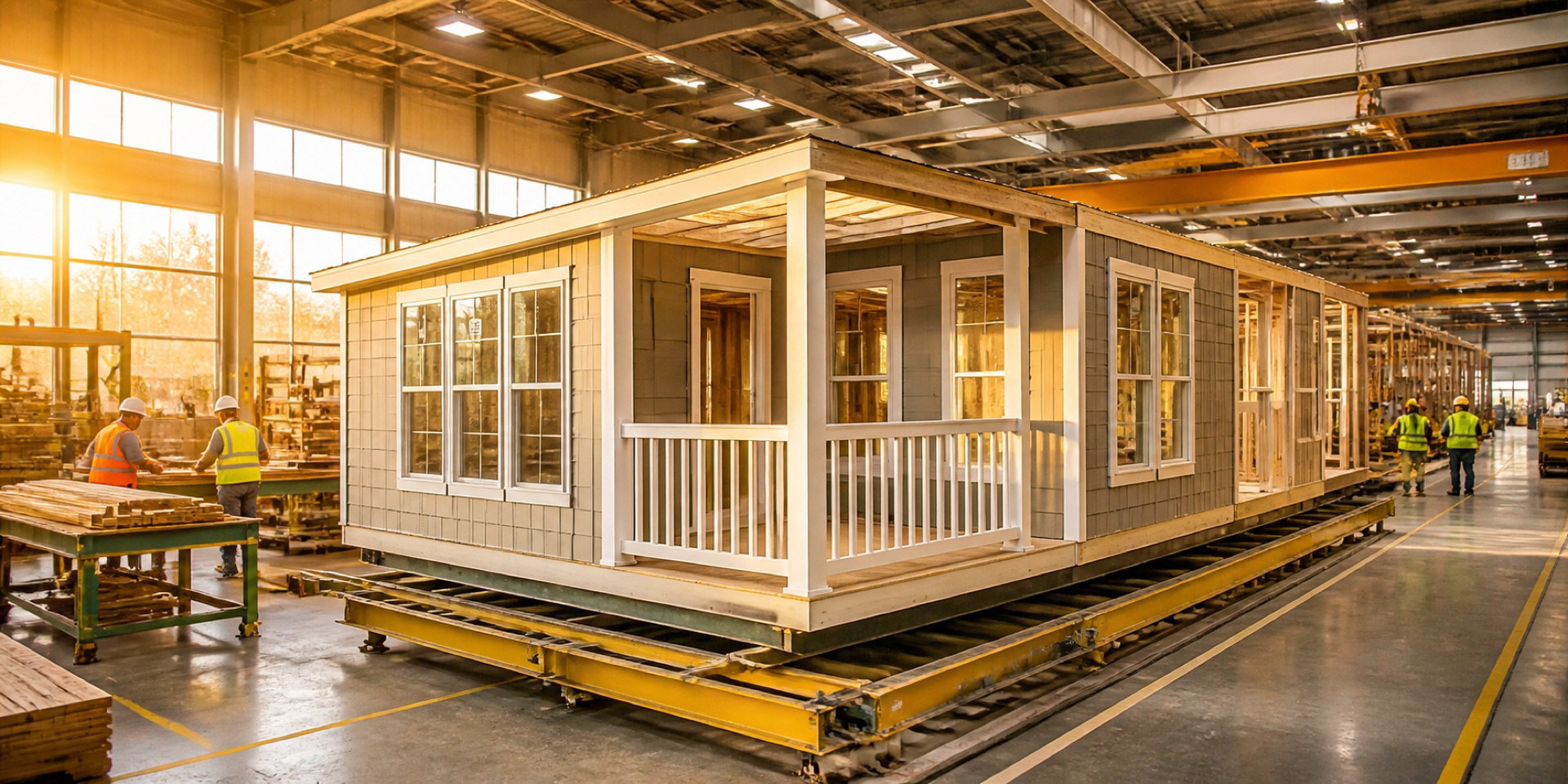
The practical goal is not to maximize one number in isolation. Insulation should fit tightly around the building assembly, while air sealing limits unwanted drafts and thermal bridging reduces the paths that let heat move through framing. Factory construction can support consistent application of these details, but buyers should still ask which specifications apply to the home and its intended climate.
Why the HUD Code matters
Modern manufactured homes are built under the federal Manufactured Home Construction and Safety Standards, commonly called the HUD Code, rather than being treated as older pre-1976 housing. The U.S. Department of Energy explains that homes built before 1976 often used 2-by-2 wall studs, while new manufactured houses are required to use at least 2-by-4 studs: DOE guidance on energy-efficient manufactured homes.
That additional wall depth creates more room for insulation and supports a more capable envelope than many older homes had. During a tour or design consultation, ask for the wall, floor, and ceiling insulation specifications, along with information about air sealing and window performance. Looking at the complete envelope helps you evaluate comfort and long-term affordability, not just a single advertised feature.
Energy Certifications That Matter: ENERGY STAR and DOE Programs
When comparing energy efficient manufactured homes, look beyond a general promise of lower utility bills. Ask which certification applies, what it verifies, and whether the home you are considering is actually certified rather than simply designed with efficient features. Certifications can give you a clearer basis for comparing comfort, operating costs, and construction quality.
ENERGY STAR: a practical benchmark for homebuyers
An ENERGY STAR certified manufactured home is evaluated against defined efficiency criteria, not just a list of upgraded appliances. The Department of Energy explains that ENERGY STAR certification can provide lower utility bills and greater comfort. ENERGY STAR also reports that a typical certified household can save about $450 per year on energy bills. Although actual savings depend on the home's size, climate, energy rates, and how the household uses the home. You can review the certification details in our guide to modern energy efficiency standards, then ask the dealer for documentation showing whether a specific home carries the certification.
During a tour, connect the label to the home itself. Ask whether the certification covers the model and configuration you are reviewing, including its heating and cooling equipment. A home may offer ENERGY STAR appliances or efficient equipment without the entire home being ENERGY STAR certified.
DOE Efficient New Homes for manufactured homes
The DOE Efficient New Homes program was created specifically for manufactured homes. A certified home must meet all criteria in the program's Manufactured Homes National Program Requirements. The program also requires the home and plant to be certified under the oversight of a recognized quality assurance provider. That independent oversight is useful when you want evidence that efficiency measures were verified through a defined process, rather than relying only on a sales description.
Net Zero Ready: planning for very low energy use
Net Zero Ready homes take a more comprehensive approach. They are designed so future renewable-energy improvements, such as solar, can help offset a substantial share of household energy use. DOE research identified Zero Energy Ready manufactured homes as an emerging option, while industry examples describe Net Zero Ready homes as a distinct high-performance category. Availability may vary by manufacturer, plant, location, and configuration, so ask what the designation means for the exact home and which renewable-ready features are included.
For first-time buyers, these labels can help compare long-term ownership costs. For downsizers, predictable comfort and lower energy demand may matter as much as the purchase price. Request the certification name, verification documents, and projected equipment details before treating an efficiency claim as a meaningful point of comparison.
| Certification | What It Verifies | Best For |
|---|---|---|
| ENERGY STAR | Defined efficiency criteria; third-party verified | Homebuyers wanting a proven utility-cost benchmark |
| DOE Efficient New Homes | National program requirements; plant-level QA oversight | Buyers seeking independent manufacturing-process verification |
| Net Zero Ready | Designed for future solar offset; high-performance envelope | Long-term owners planning renewable-energy additions |
High-Efficiency HVAC and Modern Heat Pump Technology
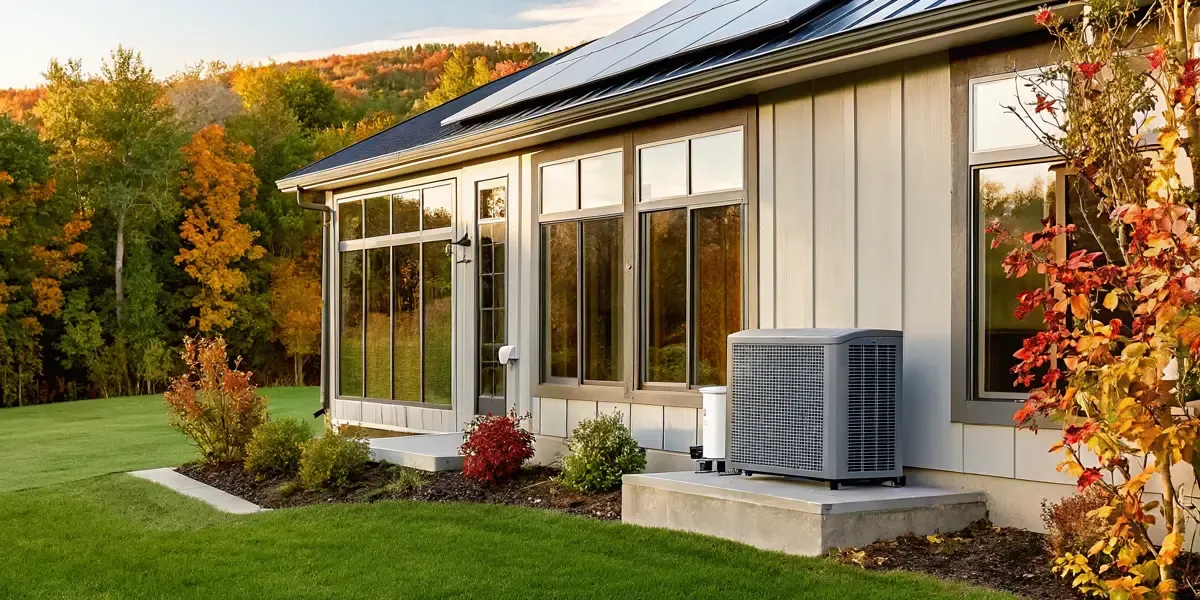
Heating and cooling equipment has a major effect on both comfort and monthly operating costs. New manufactured homes can be equipped with high-efficiency systems, including inverter-driven air-source heat pumps. According to the U.S. Department of Energy, modern inverter-driven air-source heat pumps can reduce space-conditioning energy use by 57% compared with electric resistance heating. The system adjusts its output as conditions change, rather than repeatedly switching fully on and off. That can help maintain steadier indoor temperatures while using less electricity.
Why factory-installed ductwork matters
Ask how the HVAC system and ductwork are designed, sized, and tested for the specific home. Some ducted heat pump systems can be partially installed at the factory, where controlled conditions support consistent assembly and proper equipment sizing. The remaining field connections still need careful inspection after delivery and installation.
Duct leakage testing is an important part of that inspection. A qualified installer should test the system, seal accessible connections, and confirm that conditioned air is reaching each room instead of escaping through gaps. Good duct quality installation supports efficiency, comfort, and more even temperatures throughout the home. It is also worth asking whether ventilation and filtration are included in the HVAC design, since an efficient home still needs healthy indoor air.
Cold-climate and geothermal options
Cold-climate heat pumps are designed to continue operating efficiently in colder conditions, making them worth discussing for mountain communities in Northern California and parts of Oregon. The right system depends on the home's load calculations, electrical service, insulation, local weather, and the backup-heat strategy. A dealer or HVAC professional should explain how the system is expected to perform during the coldest periods rather than relying on a generic efficiency label.
Geothermal heat pumps are another option for a permanently sited manufactured home. They use the relatively stable temperature of the ground for heating and cooling, but installation requires site work and specialized equipment. Because the ground loop is easiest to plan alongside new construction, geothermal can be most cost-effective when included in the original home and site design.
For downsizers living on fixed incomes, these choices are about more than technology. Predictable energy costs can make a monthly budget easier to manage, while consistent temperatures reduce the temptation to overuse heating or cooling. During a tour, request the proposed HVAC specifications, duct-testing documentation, and estimated operating assumptions. That practical information makes it easier to compare energy efficient manufactured homes on long-term comfort and ownership costs, not just purchase price.
Windows, Doors, and Renewable Energy Options for Manufactured Homes
Once the building envelope and heating system are addressed, smaller features can make a noticeable difference in comfort and energy use. When comparing energy efficient manufactured homes, ask which window, door, solar, and control options are available for the specific home design and installation site.
Choose efficient windows and doors
Double-pane Low-E windows are standard in many modern manufactured homes. The two panes create an insulating air space, while the Low-E coating helps limit unwanted heat transfer through the glass. Look for tightly sealed frames and thoughtful placement, especially in rooms with strong afternoon sun. ENERGY STAR doors can complement the windows by reducing drafts around exterior entries. During a home tour, open and close each door, check the seals, and ask how the selected products are rated for the local climate.
Match solar technology to the home and site
The U.S. Department of Energy includes renewable-ready features, including PV-ready planning, among high-performance manufactured home practices. Solar photovoltaic panels may be suitable for a manufactured home roof when the structure, roof design, local conditions, and installer confirm the added load is appropriate. A professional should evaluate roof attachment, wiring, orientation, shading, and local utility requirements before installation.
Solar water heating requires a different conversation. Collectors and storage equipment can be heavy, so a ground-mounted system may be a better choice than placing the equipment on the roof. DOE guidance on renewable energy for manufactured homes reinforces the importance of evaluating the complete home and site rather than assuming every technology fits every installation. See the Department of Energy's guide to energy-efficient manufactured homes for additional purchasing and retrofit considerations.
Use passive design and smart controls
Passive solar planning can reduce heating and cooling demand without adding complex equipment. Orienting the home to use winter sun, designing a sunspace where appropriate, and combining shading, trees, and other landscaping can help manage seasonal heat gain. These decisions should be made with the lot, windows, and neighboring homes in mind.
Finally, a smart thermostat and home energy monitor can help residents see patterns and adjust settings. For first-time buyers, that feedback supports better control of monthly costs. For downsizers, it can make unusual usage easier to spot before it becomes an unexpected bill.
What To Look For When Touring Energy-Efficient Manufactured Homes
A tour is your chance to compare documented performance, not just finishes. Bring a notebook and ask the same questions for every home so long-term comfort and operating costs stay part of the decision.
- Review insulation R-values. Ask to see the specification sheet and confirm the listed R-values for the ceiling, walls, and floors. Look for complete coverage rather than relying on a general statement that the home is "energy efficient." Factory construction can support precise insulation installation when the details are properly documented.
- Ask whether the home is ENERGY STAR certified. Request the certification documentation and ask what features support it. The U.S. Department of Energy notes that ENERGY STAR certified manufactured homes can provide lower utility bills and greater comfort. Read the Department of Energy's guidance on energy-efficient manufactured housing.
- Verify the heat pump type. Find out whether the system uses inverter-driven technology or electric resistance heating. Ask how it performs during colder weather and whether the equipment was sized for the home. High-efficiency heating and cooling systems are among the equipment options available in new manufactured homes.
- Inspect the windows. Look for double-pane glazing and Low-E glass, then ask how the window package is rated for the home's climate. Check for smooth operation, intact seals, and drafts around frames and doors.
- Ask about duct leakage testing. Confirm whether the ducts were tested after installation and request the results. A well-installed, properly sealed duct system helps the HVAC equipment deliver conditioned air where it belongs.
- Look for DOE certification and plant quality assurance. Ask whether the home qualifies for the DOE Efficient New Homes manufactured-home program and whether the manufacturing plant is covered by recognized third-party quality assurance. The program requires certified homes to meet its national requirements. Review the DOE program requirements.
- Check the HUD label date. Record the date and label information for your records. A manufactured home is built under the federal Manufactured Home Construction and Safety Standards, so the label helps document its regulatory history.
- Request utility bill estimates. Ask for projected electricity and fuel costs, along with the assumptions behind them. Use the estimate as a comparison point, not a guarantee, since climate, thermostat settings, household size, and utility rates all affect actual bills.
Frequently Asked Questions
What is the most important energy feature to check first?
Start with the building envelope: insulation, air sealing, windows, doors, and the condition of the ductwork. These features help control heat transfer before the heating or cooling system has to work harder. Ask for the home's insulation specifications, window type, and information about duct quality installation. High-performance manufactured homes use proven insulation and reduced thermal-bridging practices to support comfort and efficiency, according to the U.S. Department of Energy's Building America Solution Center (source).
Are ENERGY STAR manufactured homes worth considering?
Yes, certification gives you a useful performance benchmark when comparing homes. The U.S. Department of Energy says ENERGY STAR certified manufactured homes can provide lower utility bills and greater comfort than standard options (source). Ask the dealer which features support certification and whether documentation is available for the specific home and model.
Should I choose a heat pump for a manufactured home?
A high-efficiency heat pump can be a strong option because one system can provide heating and cooling. Ask whether the equipment is correctly sized for the home, whether the ducts have been tested, and how the system performs during the coldest conditions in your area. In mountain areas and Southern Oregon, discuss cold-climate equipment and backup heat with a qualified installer rather than assuming every heat pump has the same performance.
Can a manufactured home be prepared for solar power?
Many modern designs can include renewable-ready details, such as provisions that make a future solar photovoltaic installation easier. The Building America Solution Center identifies PV-ready features as part of high-performance manufactured home guidance (source). Ask about roof suitability, electrical capacity, utility interconnection, and whether the home site or community has installation restrictions before budgeting for solar panels.
Schedule a Tour of Energy-Efficient Manufactured Homes
Seeing a home in person can make it easier to compare insulation, windows, heating and cooling systems, and other efficiency features that support everyday comfort. Schedule a tour of our energy-efficient manufactured homes to explore available options and discuss what fits your priorities. Schedule your tour when you are ready to take the next step.

Northern Mobile Homes
Northern Mobile Homes stands out as New Hampshire’s best option for manufactured homes, thanks to our unbeatable combination of exceptional service, affordable prices, and a vast selection. Visit us today to experience why local homebuyers consistently choose New England Mobile & Manufactured Homes as their trusted home dealer. New England Mobile & Manufactured Homes is the best choice for your manufactured or mobile home in Rochester, NH.
Get started with Northern Mobile Homes
Find, design, and order your next home in a few clicks.
Dealer License #: