Manufactured Home vs Site-Built Home Cost: New England Guide
Schedule a free consultation. Compare the manufactured home vs site-built home cost for New England buyers. Save up to $300,000 with factory-built quality.
Building a standard home in New England often costs more than local families can afford. Harsh winters and high labor rates keep pushing site-built housing prices to historic highs.
Ready to see how much you can save? Call (603) 722-0466 for a free consultation with our New England home experts.
The manufactured home vs site-built home cost gap is the most vital detail for New England buyers to understand. Nationally, a new site-built home averages $424,176, while a new manufactured home averages just $124,800. This shows a massive price gap of nearly $300,000, letting buyers get a quality home for about a third of the standard cost. Research from the Harvard Joint Center for Housing Studies shows that factory-built homes offer a large cost advantage. This is due to bulk purchasing, factory production, and quick setup. These savings come from building in a controlled indoor space, which avoids bad weather and reduces material waste. New England buyers can use these savings to buy land, clear sites, and build a modern home without taking on massive debt.
But how does this gap play out when you add land and site prep to the final bill? To find the true answer, we must look closely at all the hidden fees. Let us look at these details in Manufactured Home vs. Site-Built Home: The Real Price Gap. The path begins with
Manufactured Home vs Site-Built Home Cost: The Real Price Gap
Comparing base purchase prices
For many New England buyers, the choice between home types comes down to the budget. Comparing the manufactured home vs site-built home cost reveals a massive starting price gap. Nationwide, a new site-built home averages $424,176, while a new manufactured home averages just $124,800. This means buyers can save nearly $300,000 when they buy the home itself.
This gap is also clear when looking at the price per square foot. Nationwide, manufactured homes average $55 to $65 per square foot. On the other hand, standard site-built homes average about $168 per square foot. These lower costs allow local families to buy a spacious home with modern features without taking on high levels of debt.
Why building costs are lower
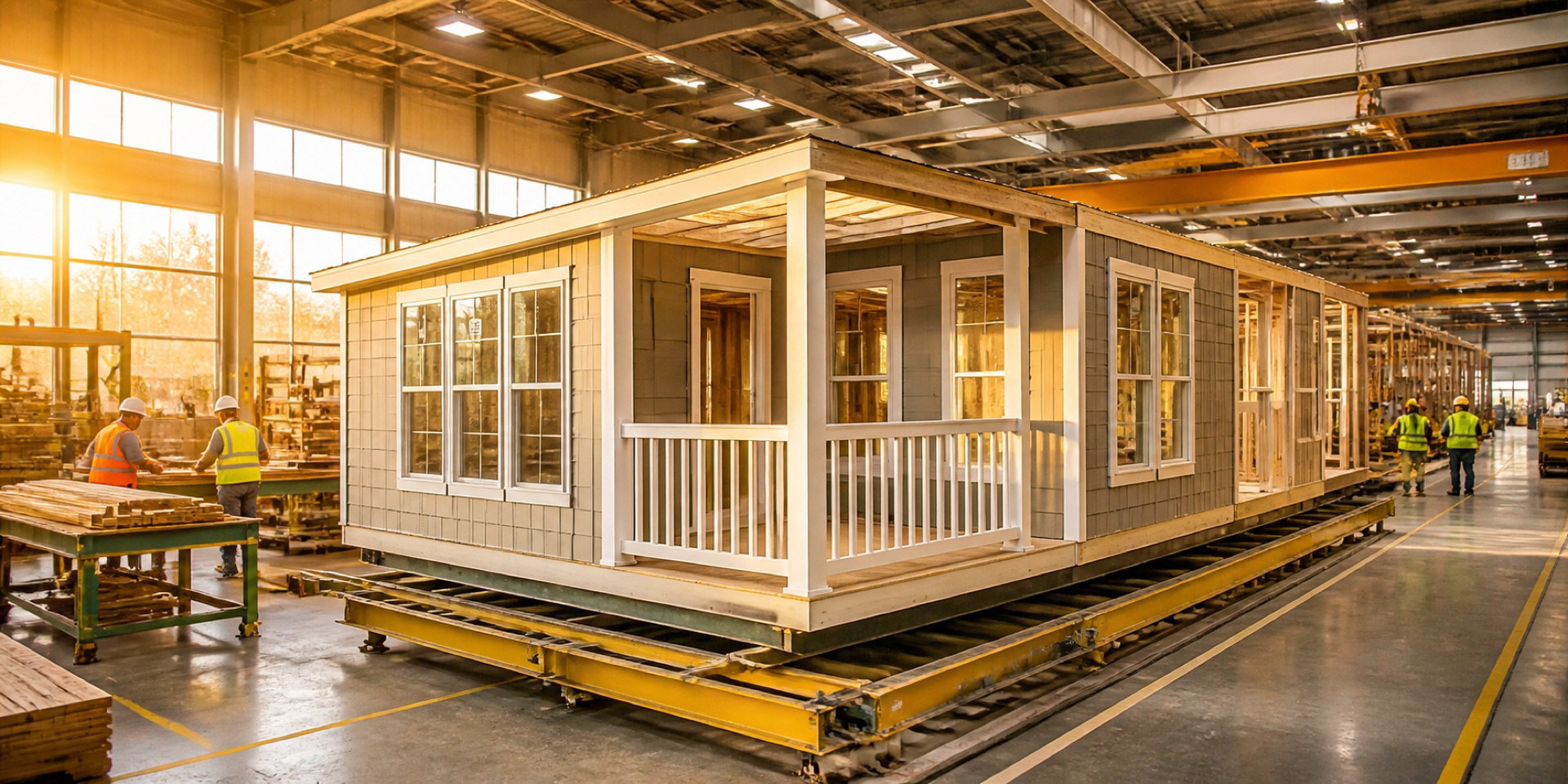
The main reason for this price gap is the building process itself. Manufactured homes are built inside modern, climate-controlled plants where builders use strong tools and strict plans. This controlled indoor space means bad weather never slows down the work on your house. Workers do not face rain, snow, or freezing winds, which often delay standard New England home builds.
Buying power also helps to keep costs down, as factory builders buy lumber, plumbing, and steel in bulk. This large scale helps them get much lower prices than a local contractor can find. The factory also has a steady team of skilled workers on site every single day. This steady labor flow is much more efficient than hiring separate crews for a standard site build.
Factory building also ensures high quality standards. Inspectors check every phase of construction to meet federal HUD code guidelines. This constant oversight prevents costly mistakes and ensures the home is safe and energy-efficient from day one.
Siting costs and size differences
It is important to know that simple price checks can be misleading. A study by the Harvard Joint Center for Housing Studies notes that basic comparisons often ignore home size and features. They also omit the real cost of moving and siting the home. To find the right fit for your needs, you can browse our manufactured home models to see what options exist.
When you plan to buy, you must factor in costs beyond the home itself. This includes buying land, clearing the site, and setting up utility hookups, which are not part of the base price. Exploring the full manufactured home building costs helps you plan for site work and permits. Working with a local expert helps ensure you find a quality plot, manage local zoning rules, and set up these services well.
How Financing Differs Between Manufactured and Site-Built Homes
Financing a manufactured home costs less overall than a site-built mortgage because the base price is lower. Buyers who own their land qualify for standard mortgages, while those on leased land use chattel loans with slightly higher rates. FHA Title I and Title II loans offer low-down-payment options for qualified New England buyers.
When you compare a manufactured home vs site-built home cost, you must also look at how you will pay for the home. Traditional site-built homes are almost always funded with a standard mortgage. But if you want to buy a manufactured home, your financing options will depend on where the home sits. In New England, studies show that limits on access to affordable financing remain a key hurdle for many buyers.
Chattel Loans and Mortgages
If you do not own the land under your home, you will likely need a chattel loan. This personal property loan is often used when a home is placed on leased land or in a park. These loans are fast to close, but interest rates can run 1.5% to 5% higher than a conventional mortgage. This rate gap can add a large amount to your monthly payment over time.
On the other hand, if you buy the land along with your home, you can get a standard real estate loan. When you bundle the home and land together, banks view the property as real estate, which allows you to secure a conventional mortgage. To help you plan, you should look at different manufactured home financing options before you choose a site. Placing your home on a permanent foundation is often needed to qualify for these better terms.
Government Loan Programs
Many buyers use government-backed loans to purchase their homes. The Federal Housing Administration offers two main paths known as Title I and Title II loans. A Title I loan is ideal if you only buy the home, while Title II loans are for homes firmly attached to land you own. Both programs offer lower down payments and relaxed credit rules than standard mortgages, making home ownership easier for many families.
In New England, local programs can also help make your purchase easier. For example, states like New Hampshire and Maine offer unique housing grants and low-rate loans for qualified buyers. Local banks in the region often focus on these programs and understand local zoning rules. By choosing the right financing, you can enjoy all the benefits of a modern home without the high cost of traditional building.
Construction Timeline and Quality: 2 Months vs. Up to 2 Years
Manufactured homes take 2 to 6 months to complete versus 6 months to 2 years for site-built homes. Indoor factory construction eliminates weather delays, and parallel site prep while the home is being built saves additional weeks. HUD code inspections ensure consistent quality throughout the process.
Building a new home in New England requires careful planning and a solid schedule. Standard site-built homes often take six months to two years to complete. In contrast, today's manufactured homes are often ready in just two to six months. This rapid pace is a major reason why the manufactured home vs site-built home cost remains so much lower. By cutting down on build times, buyers can save on labor and housing costs during the building phase.
Building speed and efficiency
Most of the build time for a manufactured home happens inside a factory. Building indoors protects raw supplies from harsh New England rain, snow, and ice. On a standard job site, bad weather can halt work for days or weeks. Building indoors keeps the project on track. Crews can work every single day without weather delays, which keeps labor costs low and easy to plan.
Indoor factories also use fast assembly line methods. Workers do specific tasks, which speeds up building and reduces errors. Also, factory builders buy raw supplies in bulk. Research by the Harvard Joint Center for Housing Studies shows that factory systems drive major cost savings. These savings come from bulk purchasing and controlled workspaces. These time savings are passed directly to the buyer.
Another timeline advantage is parallel land prep. While crews build the home in the factory, local workers can clear the land and pour the foundation on site. For site-built homes, these tasks must happen one after another. Doing both at once saves weeks of waiting time, helping New England families move into their new homes much faster.
Building codes and construction quality
Construction quality is also a key factor in the timeline. Manufactured homes are built to the federal HUD code. This code enforces strict rules for fire safety, wind resistance, and energy efficiency. Standard site-built homes must meet local town or state building codes instead. Manufactured homes are built on a permanent steel chassis to meet federal standards. The factory inspection process helps keep production consistent while protecting construction quality.
| Feature | Manufactured Home | Site-Built Home |
|---|---|---|
| Average Build Time | 2 to 6 months | 6 months to 2 years |
| Building Environment | Climate-controlled indoor facility | Outdoor open-air job site |
| Construction Standards | Federal HUD Code regulations | Local state and town codes |
| Weather Delays | Zero delays from weather | Frequent delays from rain or snow |

Climate resilience in New England
New England winters demand tough construction and excellent insulation. Modern manufactured homes use advanced thermal sealing and thick insulation to keep heating bills low. Since these homes are built indoors, the insulation remains completely dry during the build. This dry building process prevents mold and ensures the thermal barrier works perfectly. Homeowners in cold states like New Hampshire and Maine can enjoy warm, cozy homes while keeping energy costs low.
The Hidden Costs New England Buyers Should Know
Beyond the base price, New England buyers should budget for lanep your starting price low.
Do manufactured homes appreciate in value like site-built homes?
Yes, but it depends on the land. If you own the land beneath the home, it can gain value just like a site-built home. Harvard research shows that much of a home's rise in value comes from the land, not the structure. If you place a home in a park where you rent the land, the home may not gain value as fast. Owning both the land and the home is the best way to build wealth over time.
Are there extra costs to consider when buying a manufactured home?
Yes, the base price does not include everything. You must also budget for buying land, clearing it, and putting in a foundation. Housing studies show that site prep, water lines, and power hookups can add a lot to your final bill. You may also need to pay for permits and transport. Siting rules in some New England towns can also affect these extra costs.
Ready to Compare Your New England Home Options?
Every month you wait to build, housing and land costs in New England keep going up. Traditional building delays can leave you stuck in a home that no longer fits your needs. Starting your plans today means you can move into a warm, custom manufactured home in just a few months. Our homes are built in a dry, safe indoor space to prevent weather delays and damage. These modern homes are built to keep your heating bills low through the cold winters. You will save money and avoid the deep stress of a slow, site-built construction project. Let our family-owned team help you find the perfect layout for your land and budget.
Ready to start? Call (603) 722-0466 to schedule a free consultation.
anufactured homes. They also broaden consumer appeal and make it easier to get affordable loans in local towns.Overcoming outdated perceptions
Despite great gains in building quality, manufactured homes still face some old doubts. A Harvard study on housing barriers notes that these old views still limit wider adoption of manufactured homes. Many buyers do not realize that modern factories build homes to strict federal standards that equal or beat site-built safety codes.
These modern building methods ensure that a new manufactured home lasts for decades. In New England, where winter weather is harsh, these homes are built with heavy insulation and strong frames. As more buyers learn about this high quality, the gap in value between these home types will continue to shrink.
Why New England Buyers Are Choosing Manufactured Homes
Finding a home in New England can be a major challenge. When looking at manufactured home vs site-built home cost, the base price gap is only part of the story. Buyers across New Hampshire, Maine, and Vermont find that manufactured homes can cost a third of what a similar site-built home costs. This big price gap makes owning a home a real option for local families.
Families and seniors in Massachusetts, Rhode Island, and Connecticut also face high land prices. They need a smart path to get a quality home without going deep into debt. As a family-owned dealer, Northern Mobile Homes helps New Englanders through the building process from start to finish. We work to guide you through every step of the way.
Weather-Resilient Construction for Northern Winters
New England winters are long and cold. Homes in Maine, New Hampshire, and Vermont must handle heavy snow, freezing winds, and deep cold. Modern manufactured homes are built to tough standards in dry, climate-controlled factories. This clean setting protects building materials from rain and snow before the home is set up on your land.
Factory building means there are no weather delays. Traditional builders must often stop work for weeks during a winter storm. Because these homes are built indoors, the building process can be finished in as little as two to six months. You can move into your new home much faster than if you chose a site-built option.
Factory Efficiencies and Tighter Building Envelopes
Building a home in a factory is highly efficient. Research from the Harvard Joint Center for Housing Studies shows that factory builds offer major cost benefits. These great savings come from efficient methods in buying, making, and setting up each home. Since builders buy materials in bulk, they can can also block trucks from reaching your land. To keep your budget on track, you should start your site work in late spring or summer.
Do Manufactured Homes Hold Their Value Compared to Site-Built Homes?
Manufactured homes appreciate at rates similar to site-built homes when placed on owned land, because land appreciation drives long-term value growth. CrossMod designs with pitched roofs and garages further close the appearance and appraisal gap. Homes on leased land in parks typically appreciate more slowly.
Many home buyers worry that a manufactured home will lose its value over time. They often compare these homes to cars, which lose value the moment you drive them off the lot. But real estate market data shows a very different story. When comparing a manufactured home vs site-built home cost, the long-term value growth is just as important as the initial price.
The role of land ownership
A home's value growth is tied directly to the land it sits on. According to a Harvard housing report, much of the long-term rise in housing wealth comes from land appreciation. If you buy a home but lease the lot in a community, your home may not build equity over time. This happens because you do not own the land that is growing in value.
For a site-built home, the physical structure loses value over time as it wears down. The reason the total property gains value is because the land under the house rises in price. When you place a manufactured home on your own land, the same rules of real estate apply. Your land grows in value, which helps the whole property build wealth over the years.
But if you own both the home and the plot of land, your investment behaves just like a site-built home. Modern manufactured homes built on private land appreciate at rates very similar to site-built homes. You should work with experienced downsizing to a manufactured home in New England to place your home on a permanent foundation. Siting your home on owned land is the best way to protect your investment.
CrossMod designs and modern quality
In the past, many people thought manufactured homes were low-quality options. But the manufactured housing industry has made huge gains in design. Today, a new type of home called a CrossMod home bridges the appearance gap between manufactured and site-built homes.
These homes feature pitched roofs, garages, and driveways that look just like site-built homes. A Harvard research paper shows that CrossMod designs help raise the appraised value of m cut down on waste and lower the price of the build.
This exact building process also results in tighter envelopes. Factory tools make cuts and seals that are much more precise than work done on a wet building site. A tighter envelope keeps warm air inside during cold winters and cool air inside during humid summers. This leads to lower monthly power and fuel bills for New England homeowners.
A Smart Path to Regional Homeownership
In the past, buying a home in Massachusetts, Rhode Island, or Connecticut seemed out of reach. High building costs made site-built options too expensive. Now, more buyers are turning to downsizing to a manufactured home in New England to get the space they need. Modern manufactured designs offer the same style, comfort, and safety as site-built homes.
Northern Mobile Homes serves as your trusted local partner throughout this process. We help you find the right land, choose the best floor plan, and manage the site setup. Our team is proud to offer top quality homes that fit your budget. Let us help you find a great home that keeps you warm through every New England winter.
Talk to our family-owned team today. Call (603) 722-0466 to discuss your budget, timeline, and floor plan options for your new manufactured home.
Frequently Asked Questions
Is it cheaper to buy a manufactured home or have one built?
Yes, a manufactured home is much cheaper than a site-built home. Market data shows a new site-built home runs about $424,176, while a new manufactured home costs about $124,800. This saves buyers about $300,000. These savings come from building indoors and buying bulk goods. Building inside a factory cuts out weather delays and waste. This makes the manufactured home vs site-built home cost gap very clear.
How much does a 2000 sq ft manufactured home cost compared to site-built?
A two-thousand-square-foot manufactured home is much cheaper than a site-built home of the same size. National data shows manufactured homes cost about $55 to $65 per square foot. In contrast, site-built homes cost about $168 per square foot. That means the home itself might cost $110,000 to $130,000. A site-built home of that size would cost over $330,000. Buying a manufactured home helps ked acquisition, site clearing, well and septic installation, foundation work, and utility hookups. Zoning laws in towns across New Hampshire, Maine, and Vermont can restrict where manufactured homes may be placed, adding permitting costs.
When comparing the manufactured home vs site-built home cost, the price tag on the home is not the only thing to check. You must look at the whole picture to plan a real budget. For a manufactured home, you will need to pay for land, site prep, utility hookups, and permits. In New England, local rules and tricky land conditions can add extra costs.
Local zoning and land rules
Zoning laws and land-use rules can restrict where you can place a home. A report by the Harvard Joint Center for Housing Studies shows that zoning laws limit siting in many areas. These rules can erode the savings you get from factory building. Before you buy, you should check local town bylaws. Some New England towns have strict rules about home size, roof pitch, or land size. For example, a town might require a manufactured home to match the look of local site-built homes. Some local boards do not allow manufactured homes on single lots at all. Knowing these rules early will help you make a smart choice.
The five key site-prep steps
Preparing your land is a major part of the building process. Working with local downsizing to a manufactured home in New England can help you navigate these tasks. If you plan carefully, you can avoid costly delays. Here are the five key steps to prepare your site for your new home.
- Land buying and soil testing. You must buy a buildable lot and test the soil. In New England, you may run into underground ledge or rock, which needs blasting.
- Site clearing and grading. Workers must clear trees, stumps, and brush from the home site. They will level the ground and set up proper drainage to prevent water damage.
- Well and septic setup. Most rural New England lots do not have city water or sewer. You will need to drill a well and install a septic system before the home arrives.
- Foundation building. Your home needs a solid base. You can use a concrete slab, a crawl space, or a full basement based on your budget and local codes.
- Utility hookups and finishing. Once the home is set, crews must connect the power, plumbing, and heating systems. They will also build steps, decks, or porches.
Seasonal building limits
New England winters can slow down your project and drive up site prep costs. Frozen ground makes digging foundations hard and costly. Most concrete plants close or charge extra during cold months. Heavy snow

Northern Mobile Homes
Northern Mobile Homes stands out as New Hampshire’s best option for manufactured homes, thanks to our unbeatable combination of exceptional service, affordable prices, and a vast selection. Visit us today to experience why local homebuyers consistently choose New England Mobile & Manufactured Homes as their trusted home dealer. New England Mobile & Manufactured Homes is the best choice for your manufactured or mobile home in Rochester, NH.
Get started with Northern Mobile Homes
Find, design, and order your next home in a few clicks.
Dealer License #: