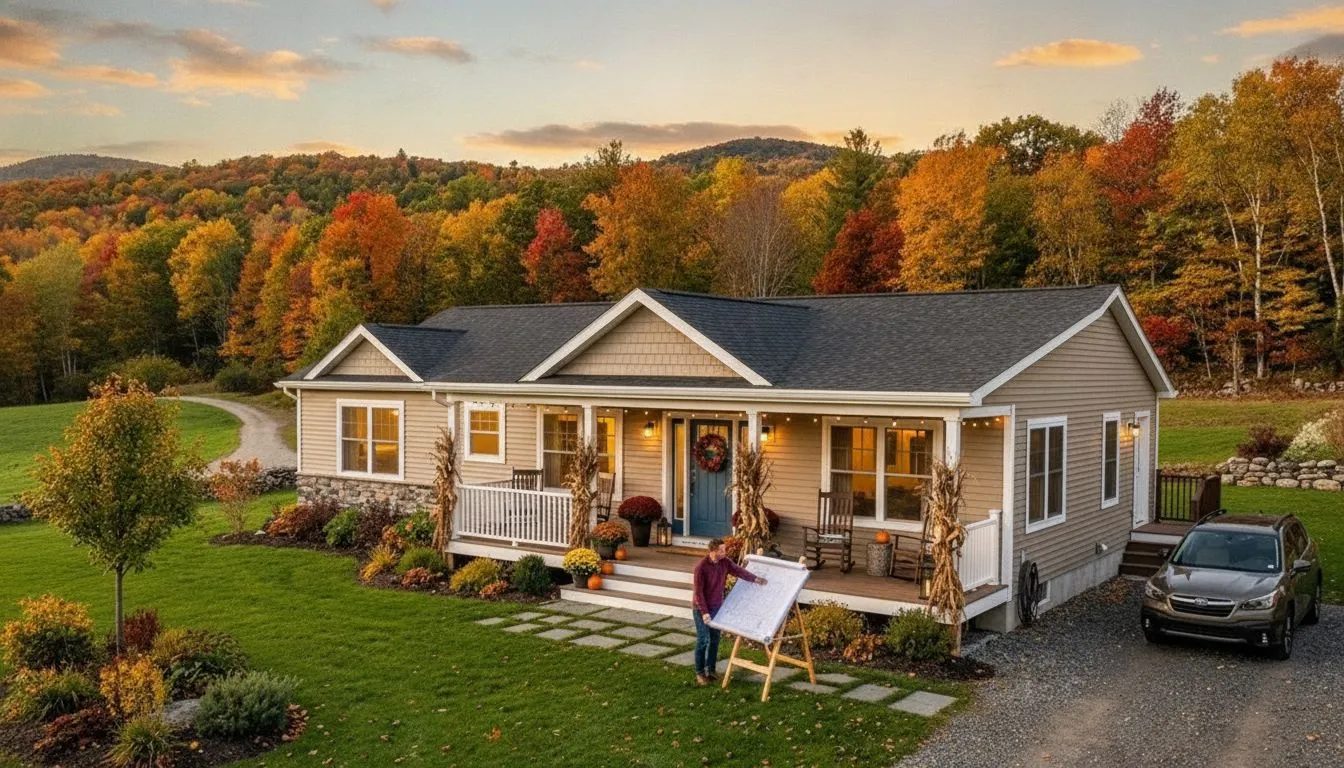
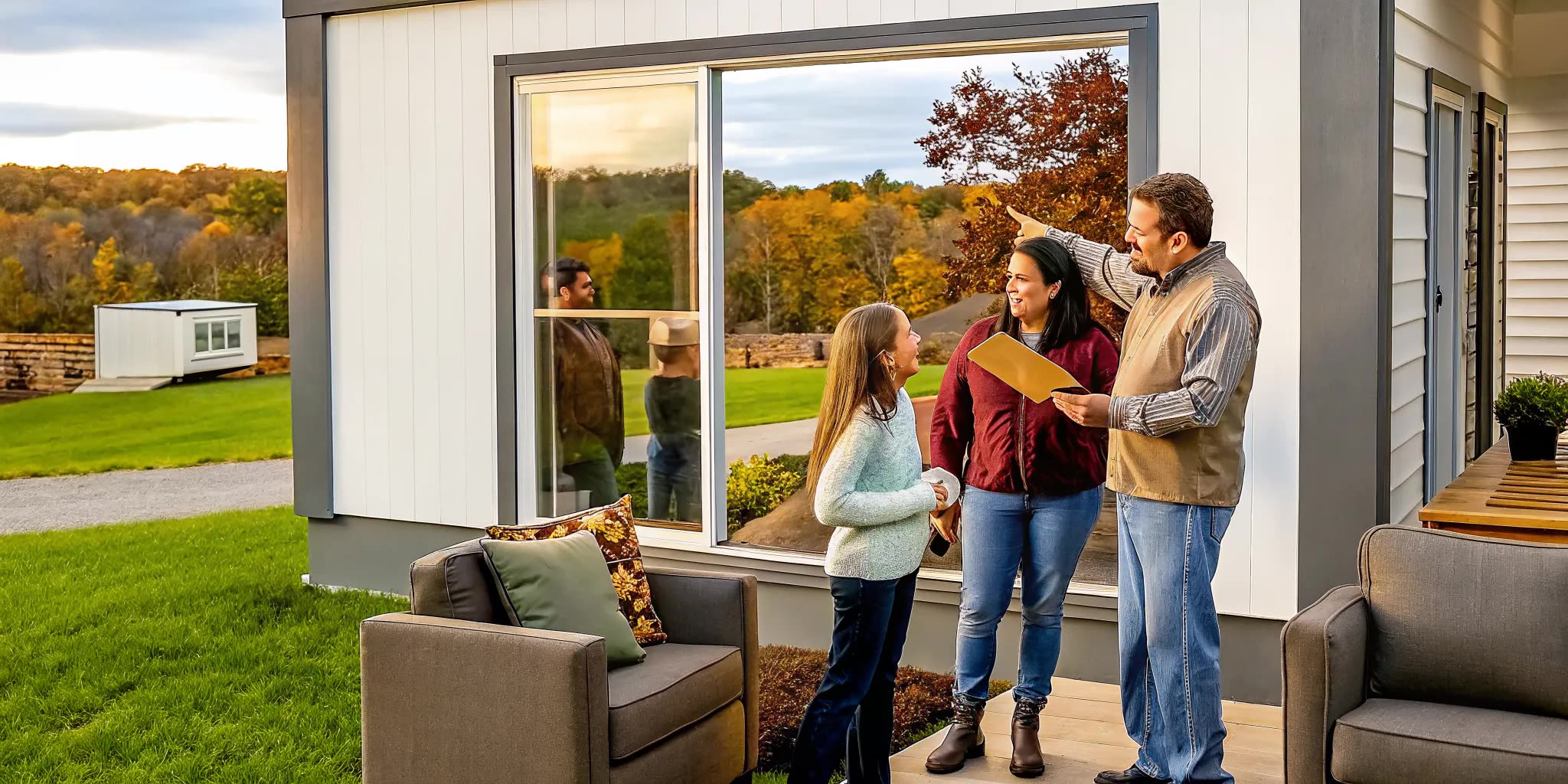
When home prices rise across New England, the way a home is built matters as much as its floor plan. Factory construction can provide consistent quality control, modern design choices, and a more manageable path to ownership for first-time buyers and downsizers.
The manufactured home meaning is a home built in a factory to federal construction and safety standards established by the U.S. Department of Housing and Urban Development (HUD). Modern manufactured homes are transported to the site on a permanent chassis and installed according to required safety standards. They are not defined by outdated trailer images or assumptions about quality. The HUD framework covers essential systems and safety, while factory production supports efficient, repeatable construction. For buyers in New Hampshire, Maine, Massachusetts, and Vermont, that distinction helps clarify what they are actually considering.
Start by exploring our manufactured home floor plans.
Seeing today's layouts and finishes in person is the fastest way to turn this definition into a plan for your next home.
Understanding the term is the first step. From here, it helps to look closely at the standards behind it. It also helps to compare this home type with homes built directly on a lot.
What Exactly Does a Manufactured Home Mean?
The manufactured home meaning is straightforward: it is a home built in a factory under federal construction and safety standards established by the U.S. Department of Housing and Urban Development (HUD). Instead of completing every stage outdoors at the homesite, builders use a controlled production environment, then transport the finished home to its permanent location for installation.
That process is not simply a way to produce a house faster. It is a defined housing category with its own national standards. HUD's Office of Manufactured Housing Programs enforces federal requirements intended to protect the health and safety of residents. Those requirements address essential aspects of construction and livability, including safety systems, electrical work, plumbing, and structural performance. You can review HUD's manufactured housing program and consumer resources at HUD.gov.
Built in a factory, designed for real life
Factory construction allows each phase of the build to follow a repeatable process. Materials are stored and assembled indoors, where weather is less likely to interrupt the work. Quality checks can happen throughout production rather than only after the home reaches the site. Depending on the floor plan, a home may be built in one or more sections, transported, and joined at the homesite.
For buyers in New Hampshire, Maine, Massachusetts, and Vermont, this controlled approach can be especially meaningful. It supports practical design choices for everyday living, whether you are purchasing your first home, planning for a growing family, or downsizing to a simpler space. It also makes room for a range of layouts and finishes, so choosing a manufactured home does not mean giving up comfort or a sense of personal style.
Why federal standards matter
The modern manufactured housing system grew from the National Manufactured Housing Construction and Safety Standards Act of 1974. That law established the federal framework behind the standards commonly known as the HUD Code. HUD oversees enforcement through its manufactured housing program, including oversight of the construction process and inspections involving factories and retailer lots.
This national framework is an important distinction from outdated assumptions about factory-built housing. A new manufactured home is built to current federal requirements, not to the informal standards associated with older housing from another era. The terminology matters because the home, construction process, and safety expectations have evolved significantly.
How factory production supports affordability
Standardized factory production can help keep a manufactured home more affordable than many site-built alternatives. Builders can purchase and use materials efficiently, repeat proven construction steps, and reduce the amount of labor required at the homesite. Those efficiencies may give first-time buyers and downsizers more flexibility when comparing floor plans, land, installation, and financing options.
Affordability does not mean the home is generic or temporary. It describes how the home is produced and how that production can reduce costs while meeting HUD standards. The right choice still depends on the land, installation plan, budget, and lifestyle you have in mind.
How Manufactured Homes Are Built to HUD-Code Standards
A manufactured home is built in a controlled factory environment rather than assembled piece by piece at the final property. The home is constructed on a permanent chassis, transported to its building site, and installed there. This process gives the manufacturer a consistent production setting while allowing the finished home to be placed in a community, on private land, or in another approved location.
The federal standard is the key part of the manufactured home definition. Manufactured homes are built to the U.S. Department of Housing and Urban Development's construction and safety standards, commonly called the HUD Code. Those standards address the systems that affect daily safety and habitability, including fire safety, electrical systems, and plumbing. HUD enforces the standards directly and through state agencies, and its program includes inspections of factories and retailer lots. HUD's manufactured home resources explain the program and its consumer protections.
What happens before the home reaches the property?
Construction takes place in stages, with materials and work moving through a controlled production line. Depending on the floor plan, a home may be built in one or more sections. Each section is prepared for transport and later joined at the permanent site. Factory production can support more consistent quality control and reduce weather-related interruptions that can affect open-site construction. It can also improve energy efficiency by making it easier to apply repeatable techniques across the build.
The work is not finished when the sections arrive. Site preparation, delivery, joining, utility connections, and installation all matter. HUD's Manufactured Home Installation Program, established in 2008, ensures that every state has minimum installation standards and an operating installation program. Proper installation helps support the home's safety, structural integrity, performance, and long-term durability.
| Consideration | Manufactured home | Site-built home |
|---|---|---|
| Construction | Built in a factory on a permanent chassis, then transported in sections and installed at the property. | Constructed primarily at the final property, with materials and trades coordinated on site. |
| Code standard | Built to federal HUD construction and safety standards, with regulated installation requirements. | Built to applicable local, state, or regional building codes enforced for the property. |
| Cost factors | Factory production and reduced on-site labor can make the home more affordable, although land, delivery, site work, and installation still affect the total. | On-site labor, materials, project duration, permits, and local construction conditions all contribute to the total cost. |
| Location | Transported to an approved site, where it is installed and connected to required utilities. | Built directly on the lot selected for the home, subject to local site and zoning requirements. |
The comparison is not about whether one process is universally better. It is about understanding the standard, the construction pathway, and the site responsibilities. For a New England buyer, reviewing the proposed home, land requirements, delivery route. Foundation or support system, and installation plan together is an important part of making an informed decision.
Manufactured vs. Mobile vs. Site-Built Homes
These terms are often used interchangeably, but they describe different points in housing history and construction. Knowing the distinction helps New England buyers compare homes accurately, ask better questions about a property, and understand which standards apply.
What "mobile home" means
"Mobile home" is a historical term for a factory-built home constructed before June 15, 1976. That date matters because federal HUD construction and safety standards took effect then. Homes built before the cutoff were not produced under today's HUD code, even if they have been renovated or maintained over the years.
For buyers considering an older property, the construction date can affect how the home is evaluated, financed, insured, and installed. Ask for the original documentation and look for the home's identifying information rather than relying on a listing label alone.
What makes a home manufactured?
A manufactured home is built in a factory after June 15, 1976, according to federal HUD standards. The home is transported to its site and installed there, often on a permanent foundation. HUD's Office of Manufactured Housing Programs oversees standards designed to protect residents' health and safety, and the program also addresses installation requirements and consumer complaints. HUD explains the federal standards for manufactured housing.
The factory setting does not mean every home looks the same. Buyers can choose from different layouts, sizes, finishes, and features, including spacious multi-section floor plans. The key distinction is the standard governing construction: manufactured homes follow the federal HUD code. While the home's site work and installation also need to meet applicable local requirements.
How site-built homes differ
A site-built home is constructed primarily on the property where it will remain. Its construction is generally governed by the state and local residential building codes that apply in that location. Materials arrive at the lot, and contractors complete the structure, systems, and finishes on site.
That difference affects the buying process. With a site-built home, buyers typically focus on the lot, plans, contractor, inspections, and the sequence of work taking place there. With a manufactured home, buyers also evaluate the factory builder, floor plan, transportation route, foundation, site preparation, and installation. Both types still require careful attention to land, utilities, permits, financing, and final inspections.
In short, "mobile" identifies an older pre-1976 category, "manufactured" identifies factory-built housing produced to HUD standards after the cutoff. And "site-built" identifies a home constructed mainly on its permanent lot. For a closer look at manufactured-home meaning and HUD-code standards, review the construction and code differences before comparing floor plans.
Why Do Manufactured Homes Cost Less?
The lower price comes from how the home is built, not from skipping essential quality or safety features. Factory production uses repeatable processes, standardized materials, and controlled work areas. Crews can complete much of the construction indoors, while several trades work from an established plan instead of coordinating around changing site conditions. That efficiency helps reduce waste, delays, and labor costs at the building site.
For buyers in New Hampshire, Maine, Massachusetts, and Vermont, those savings can make a meaningful difference. Land, site preparation, utility connections, permits, transportation, foundation work, and installation still affect the final project budget. However, starting with a more efficient home price may leave more room in the budget for the location, finishes, or features that matter most to your household.
What does a manufactured home really cost?
According to the U.S. Census Bureau, the average cost of a new manufactured home in 2025 was approximately $120,000. That figure is a useful national reference point, not a guaranteed delivered price for a specific home in New England. Your total will depend on the floor plan, options, delivery distance, foundation, site conditions, utility work, local requirements, and whether you already own land.
A clear estimate should separate the home itself from the costs of preparing and completing the property. Ask which items are included in the quoted price and which are allowances or owner responsibilities. For example, a home may be priced separately from the foundation, driveway, well or septic system, electrical service, and final connections. Reviewing those details early helps you compare homes accurately and avoid treating a low starting price as an all-in project cost.
How do financing and land affect affordability?
The financing structure can also change the monthly payment and the options available to you. Some buyers finance the home and land together, while others purchase or lease a homesite separately. Loan terms, down payment requirements, interest rates, land ownership, and the home's installation all deserve a careful review before you choose a floor plan.
Our guide to financing your manufactured home can help you understand the questions to ask lenders. A transparent conversation about your land, budget, credit profile, and intended installation location gives you a more realistic picture of what you can afford. The goal is not simply to find the lowest advertised number. It is to build a complete budget for a comfortable, well-installed home that fits your life in New England.
Are Manufactured Homes a Good Investment?
They can be, but the answer depends on what you are buying along with the home. A manufactured home may provide an attainable path to ownership, comfortable long-term living, and a practical alternative to higher-priced housing in New England. Its investment performance, however, is shaped by the land, the foundation, the financing, and the local market.
Land ownership is a major part of the value story
When you own both the manufactured home and the land beneath it, you generally have a more stable foundation for long-term value. The property can be evaluated as a complete real estate asset, subject to local market conditions and the quality of the site. This does not guarantee appreciation. But it gives you more control over the asset and avoids one of the biggest uncertainties in manufactured housing: paying rent for a lot you do not own.
Renting a lot can still make sense for a buyer who values predictable maintenance, community amenities, or a lower entry cost. It is important to review the community agreement before you buy. Ask how lot rent can change, what is included, which improvements are your responsibility, and what happens if you sell or move the home. Those details can affect your monthly budget and the home's resale appeal.
Construction and installation affect long-term performance
A modern manufactured home is built to federal construction and safety standards administered by the U.S. Department of Housing and Urban Development. HUD also provides minimum installation standards through its Manufactured Home Installation Program. You can review the agency's consumer resources at HUD's manufactured home resources.
Placement on a permanent foundation, careful site preparation, and professional installation matter. Together, they help the home deliver the comfort and modern amenities buyers expect from a well-maintained residence. Before closing, confirm the foundation and installation plan, drainage, utility connections, access, and any requirements imposed by the town or community. In New England, it is also wise to consider winter weather, snow loads, insulation, heating costs, and the condition of the driveway and surrounding land.
Think beyond resale price
Investment value is not limited to future sale proceeds. A home that costs less to acquire and operate may leave more room in your budget for savings, improvements, or other financial goals. Modern floor plans, energy-conscious features, and neighborhood amenities can also contribute to everyday value. Especially for first-time buyers and downsizers who want a manageable home without giving up comfort.
The right question is not simply whether manufactured homes appreciate at the same rate as every site-built property. Ask whether the home, land arrangement, financing, location, and expected monthly costs fit your long-term plan. Review the numbers with a qualified lender and compare the full ownership costs before making a decision.
What Modern Manufactured Home Living Looks Like
Modern manufactured home living is designed around comfort, practical maintenance, and the way people actually use their homes. Inside, that can mean an open kitchen and living area, a private primary suite, flexible bedrooms, and storage placed where it is most useful. Buyers can choose from a wide variety of contemporary designs and floorplans, many of which offer the proportions and features people expect from a site-built home.
That flexibility matters for New England buyers with different priorities. A first-time buyer may want a welcoming common area and room to grow. An empty nester may prefer fewer stairs, a manageable footprint, and a layout that keeps daily essentials close at hand. Retirees and downsizers often value simpler, lower-maintenance living without giving up a comfortable kitchen, private guest space, or a place to enjoy the seasons.
Comfort that works through a New England winter
Energy performance is part of the everyday experience, not just a line in a product description. Manufactured homes are built in controlled factory environments, where consistent production can support energy efficiency and quality control. The U.S. Department of Energy also notes that ENERGY STAR certified manufactured home options are available, giving buyers another way to compare efficiency when selecting a home. You can read more about the benefits of modern manufactured homes before narrowing down your choices.
In a cold New England climate, insulation and air sealing deserve close attention. Proper insulation helps a home hold onto conditioned air, while efficient windows and doors can reduce drafts and heat loss. The Department of Energy identifies added insulation and energy-efficient windows and doors as improvements that can substantially reduce heat loss in manufactured homes. These details can make winter rooms feel more even and comfortable while helping homeowners manage heating costs.
A home that fits your routine
The modern experience is also about choosing a layout that supports your routine rather than adapting your routine to an awkward floorplan. Some households need a home office or hobby room. Others want a larger dining area for family visits, a quieter bedroom arrangement, or an accessible single-level design. Floorplans come in a range of sizes and configurations, so buyers can focus on a layout that works on an ordinary weekday and for holidays and gatherings.
For many New England households, the best fit combines a thoughtfully planned interior with efficient construction and a manageable level of upkeep. A tour lets you walk through room sizes, storage, finishes, and natural traffic patterns in person. It also turns the manufactured home meaning from an abstract definition into something tangible: a contemporary home built to support comfortable, efficient living.
How to Choose a Manufactured Home in New England
Choosing a manufactured home in New England is about more than selecting an attractive floor plan. You are also evaluating the homesite, climate, installation plan, budget, and the people who will guide the project. A clear process helps first-time buyers compare options confidently and helps downsizers focus on comfort, maintenance, and long-term fit.
Start with the homesite and local requirements
Before falling in love with a design, confirm where the home will go. Review the parcel's access, slope, driveway, utilities, septic or sewer options, and foundation requirements. Local zoning and permitting rules can vary across New Hampshire, Maine, Massachusetts, and Vermont, so ask early which approvals and site preparations will be needed. A realistic homesite review prevents surprises after you choose a model.
Set a complete New England budget
Compare the full project cost, not only the advertised home price. Include site work, delivery, foundation, utility connections, permits, steps, porches, and any land costs. Manufactured housing can be an affordable path to homeownership for first-time buyers in high-cost areas, but the right comparison depends on the complete installation plan. Ask for a transparent explanation of what is included, what is optional, and what could change after the site review.
Match the floor plan to the way you live
Think through daily routines before comparing finishes. First-time buyers may want flexible rooms for work or guests, while downsizers often prioritize a manageable footprint, accessible circulation, and less maintenance. Look beyond the number of bedrooms to storage, kitchen workflow, natural light, and how the home will feel through every season. Northern Mobile Homes offers options ranging from affordable single-wide plans to spacious luxury double-wide floor plans. Making it easier to compare size and lifestyle needs without assuming that value requires giving up comfort.
Prioritize energy performance for the local climate
New England's cold winters make insulation, air sealing, windows, heating, and ventilation important selection criteria. Ask how the home is designed to manage heat loss and which efficiency upgrades are available. Factory construction can support consistent quality control and energy-conscious design, but performance also depends on proper installation. Discuss the home's foundation, marriage-line work, utility connections, and weather sealing with the project team before signing off on a model.
Evaluate the retailer and installation support
A good home-buying experience should remain clear after you select a floor plan. Look for a team that explains the timeline, coordinates the major steps, answers questions directly, and does not pressure you into a decision. Reviewing reputable manufactured home builders can help you prepare better questions about workmanship, communication, delivery, and after-sale support. Northern Mobile Homes serves New Hampshire, Maine, Massachusetts, and Vermont with a transparent, stress-free process designed to keep buyers informed.
The strongest choice is the home that fits your land, budget, climate, and everyday life together. Bring your site information and priorities to a floor-plan conversation so the recommendations can be practical from the beginning.
Schedule a tour and see our manufactured homes in person.
Frequently Asked Questions
Are manufactured homes the same as mobile homes?
No. In common industry usage, "mobile home" refers to a factory-built home constructed before June 15, 1976, when federal HUD construction and safety standards took effect. Homes built under those standards are called manufactured homes. HUD explains the current federal program and standards.
What is the difference between a manufactured home and a site-built home?
A manufactured home is built in a factory under federal HUD standards, transported to the site, and installed there. A site-built home is constructed on its lot under applicable local building codes. Both can provide comfortable, modern living, but the construction and regulatory paths differ.
How do HUD standards protect manufactured home buyers?
HUD standards address health and safety requirements for manufactured housing, including systems such as fire protection, electrical work, and plumbing. HUD also oversees enforcement and sets minimum installation standards through its Manufactured Home Installation Program. Proper installation is essential to long-term performance and safety. See HUD's manufactured housing guidance.
Why are manufactured homes often more affordable?
Factory production, standardized processes, and less on-site labor can reduce construction costs compared with traditional site-built housing. Your total budget still depends on the home, land, site preparation, transportation, installation, utilities, and financing, so compare the complete project cost before choosing a home.
Does owning the land affect a manufactured home's value?
Yes. Land ownership can support more stable value growth, while renting a lot may create different financing, resale, and appreciation considerations. Ask how the home will be titled and review land, lease, financing, and installation terms before making an offer.
What is another name for a manufactured home?
Modern factory-built homes produced to federal HUD standards are called manufactured homes. The older term "mobile home" is still used for housing built before June 15, 1976. For today's new homes, "manufactured home" is the accurate, current name and the one you will see across construction, financing, and resale.
Ready to Explore Your Options?
Schedule a personalized tour of our manufactured homes in New England today. Seeing the layouts, finishes, and available choices in person is the best way to understand what a manufactured home meaning looks like in practice. Bring your floor-plan questions and site details, and our team will guide you through the homes that fit your land, budget, and lifestyle.
Explore our floor plans and start the conversation about your next home. Whether you are a first-time buyer or downsizing in New England. We are here to help you move from understanding the definition to finding the right manufactured home for your family.

Northern Mobile Homes NH
Northern Mobile Homes stands out as New Hampshire’s best option for manufactured homes, thanks to our unbeatable combination of exceptional service, affordable prices, and a vast selection. Visit us today to experience why local homebuyers consistently choose New England Mobile & Manufactured Homes as their trusted home dealer. New England Mobile & Manufactured Homes is the best choice for your manufactured or mobile home in Rochester, NH.
Get started with Northern Mobile Homes NH
Find, design, and order your next home in a few clicks.
Dealer License #: