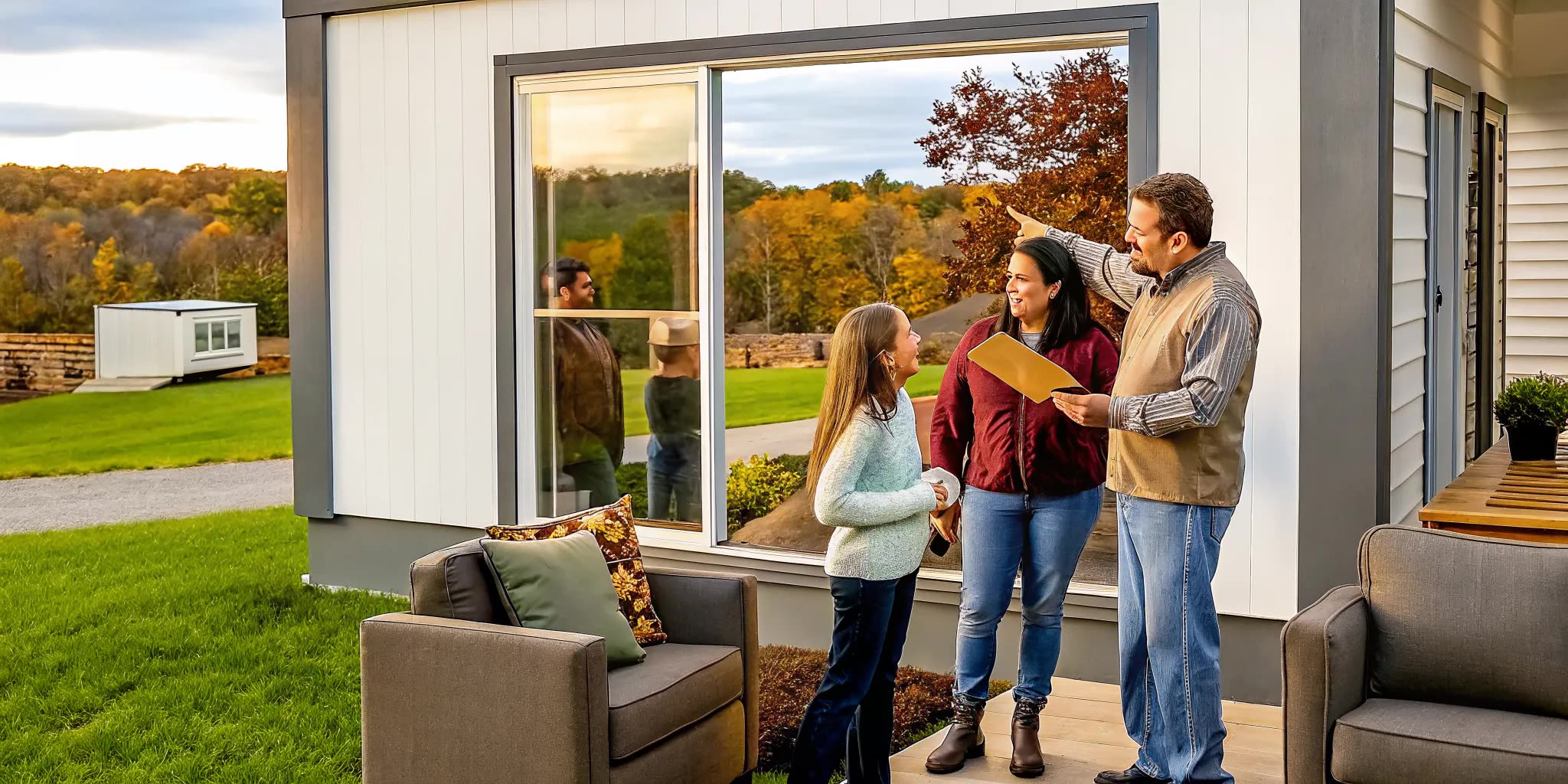
For many New England buyers, the hardest part of choosing a manufactured home is not the floor plan. It is finding financing that fits the home, land, site work, and long-term ownership goals. USDA financing may be worth exploring if you are buying a primary residence in an eligible rural area of New Hampshire, Vermont, Maine, Massachusetts, or Rhode Island.
A usda loan manufactured home purchase may qualify for up to 100% financing when the buyer, property, and home meet program requirements. Those requirements can include household income limits, an eligible location, a home that meets HUD standards, and installation on a permanent foundation.
Eligibility is determined through the USDA program and an approved lender, so the details matter before you choose a site or finalize a home. Start by understanding what the program is designed to do, then review the property and buyer requirements that shape a workable application.
Schedule a tour of a New England manufactured home and start your USDA loan conversation.
What Is a USDA Loan for a Manufactured Home?
A USDA loan manufactured home buyers use is part of the USDA Section 502 Guaranteed Loan Program, also called the Single Family Housing Guaranteed Loan Program. Rather than lending directly to every homebuyer, USDA works with approved lenders. The program helps those lenders provide financing to low- and moderate-income households purchasing a primary residence in an eligible rural area.
For a qualified buyer, this can create a practical path to owning a new manufactured home in New Hampshire, Vermont, Maine, Massachusetts, or Rhode Island. Rural eligibility does not necessarily mean a remote property or a large farm. It depends on the location and the USDA's program rules, so buyers should confirm the specific parcel with an approved lender before making plans.
The USDA describes the program as supporting adequate, modest, decent, safe, and sanitary homes. For manufactured housing, that means the home and its installation must satisfy program and property requirements. The financing conversation should include more than the home itself. Land, site preparation, foundation work, and installation may affect the total project and should be discussed early with the lender and home builder.
How the USDA guarantee can reduce the down payment barrier
One of the program's most important features is its potential for 100% financing for qualified applicants. USDA provides an approved lender with a 90% loan note guarantee, which helps reduce the lender's risk in extending a loan with no money down. That does not mean every applicant or every home automatically qualifies. Income, credit, debt, property location, home specifications, and lender underwriting all matter.
No money down also does not mean there are no costs to plan for. Buyers may still need to account for inspections, appraisals, closing-related expenses, moving costs, and project items that are not eligible for financing. A lender can explain the complete cash-to-close estimate and identify which costs may be included in the loan under the buyer's circumstances.
Starting with a clear budget makes the process easier. Review our financing resources to understand the questions to bring to a lender, then compare the potential home, land, and site-work costs together. Northern Mobile Homes can help buyers discuss the home and project scope, while an approved USDA lender determines eligibility and loan terms.
For authoritative program details, review the USDA Single Family Housing Guaranteed Loan Program. The next step is to look more closely at the borrower and property requirements that can determine whether a USDA loan is a workable option.
USDA Loan Requirements for a Manufactured Home
Eligibility for a USDA loan manufactured home purchase depends on both the buyer and the home. Meeting one requirement does not guarantee approval, so review the program with an approved lender before choosing a property or finalizing a site plan. The USDA Single Family Housing Guaranteed Loan Program is intended for qualified buyers purchasing a primary residence in an eligible rural area.
Buyer eligibility requirements
USDA program guidance sets an income limit for applicants. Household income cannot exceed 115% of the applicable median household income. The limit is based on household circumstances and location. So a lender should confirm the current threshold for your county and household size rather than relying on a general estimate.
Applicants must also meet the program's citizenship or immigration eligibility rules. Eligible applicants include a U.S. Citizen, a U.S. non-citizen national, or a Qualified Alien. An approved lender can explain which documentation is required and how the lender evaluates income, credit, debts, and other underwriting factors.
These buyer requirements are separate from the property's location requirements. A home must be in an eligible rural area, and the property must satisfy the USDA's manufactured-home standards. The program is designed for a primary residence, not a vacation property or investment purchase. Review the official USDA Guaranteed Loan Program guidance for the current eligibility framework.
Property requirements for the home and site
The manufactured home must be a new unit that has never been previously occupied. It must also meet the HUD Manufactured Home Construction and Safety Standards. These standards are a core part of the property's eligibility, not a detail to address after the home is delivered. Your lender and the professionals involved in the purchase should confirm that the selected home and its documentation meet the applicable requirements.
The home must be permanently affixed to a permanent foundation. This requirement makes site preparation especially important. A permanent foundation involves more than placing a home on a parcel. The site plan, foundation system, utility connections, drainage, access, installation, and local requirements all need to be coordinated before construction and closing.
Northern Mobile Homes can help buyers think through the site side of the purchase, including the relationship between the home, the land, and the required foundation work. If you are still evaluating a parcel, start with this guide to buying land for a manufactured home in New Hampshire. Planning early can help identify site conditions that affect feasibility, cost, and lender documentation.
Confirm the requirements before you commit
Ask an approved lender to review your household income, applicant eligibility, rural-area status, and the proposed home's age and construction documentation. Then coordinate the lender's requirements with the site-preparation plan. A manufactured home that meets HUD standards still needs an appropriate permanent foundation and an eligible, properly prepared site. Confirming those details early gives you a clearer path from financing approval to installation.
Are USDA Loans Available in Rural New England?
Yes, a USDA loan may be available for a manufactured home in parts of New England. But the property must be located in an area that meets the program's geographic rules. USDA eligibility is based on the home's address, not simply the buyer's state or county. The program is designed to help eligible households purchase a primary residence in rural areas. And some communities on the edges of larger population centers may qualify as well.
That makes it worth checking the address before assuming a property is too close to a town or city. Much of rural New Hampshire, Vermont, Maine, Massachusetts, and Rhode Island may fall within eligible areas, although boundaries can change from one community to the next. A property that appears rural on a map is not automatically eligible, and a property near a suburban area is not automatically excluded.
How to check a New England property
Start with the USDA property eligibility map. Enter the proposed property address, then review the result for the specific parcel or location. If you are still choosing land, search each address under consideration rather than relying on a general town-level assumption.
- New Hampshire: Check the address in the town where you plan to place the home. Rural properties outside major population centers may qualify, but nearby streets can have different results.
- Vermont: Search the exact site, especially when comparing properties across neighboring towns or along developed corridors.
- Maine: Review each parcel individually because large rural regions can include pockets with different eligibility designations.
- Massachusetts: Do not assume that proximity to Boston or another major city determines eligibility. The map is the better starting point for properties in smaller communities.
- Rhode Island: Use the address search carefully when evaluating less densely developed areas, since the state has compact boundaries and varied development patterns.
Confirm the result before planning your purchase
The map is an important screening tool, but it is not the same as final loan approval. An approved lender must confirm the property's eligibility and review the buyer's income, credit, debt, and other program requirements. The lender will also need to evaluate how the manufactured home will be installed and permanently affixed at the site.
Keep a record of the address and map result, then share it with your lender and home consultant early. Checking eligibility before ordering a home, purchasing land, or budgeting for site work can prevent expensive surprises. For a broader overview of available paths, review these financing options for first-time buyers and discuss the property with a qualified lender.
The USDA Rural Development program describes its guaranteed loan as a path to a primary residence in eligible rural areas. You can review the official program guidance at USDA Rural Development before taking the next step.
What Can a USDA Manufactured Home Loan Cover?
One of the practical advantages of a USDA loan for a manufactured home is that the financing can address more than the home itself. For qualified buyers, the program may help finance the land, closing costs, site development, installation, and setup costs along with the manufactured home. That broader scope can make the path to homeownership more manageable, especially when several project expenses arrive at the same time.
The home and the land
The loan can include the cost of a new manufactured home and, when the purchase involves land, the cost of the property where it will be placed. This matters for New England buyers who are purchasing a homesite rather than moving into an existing community. Instead of treating the home purchase and land purchase as entirely separate financial decisions, an approved lender can evaluate the complete project under the program's rules.
USDA guidance describes the program as helping lenders finance land costs, closing costs, site development, installation, and setup costs for manufactured homes. Read the USDA's overview of manufactured-home financing for the program's broader explanation. Eligibility still depends on the borrower, the property, the lender, and the location, so this is general program information rather than a promise of approval.
Site development, installation, and setup
A homesite often requires work before the home can become a finished residence. Depending on the property, that work may include preparing the site, coordinating delivery, completing installation, and handling setup-related requirements. These costs are easy to overlook when buyers focus only on the advertised home price, but they can have a meaningful effect on the total project budget.
This is also where Northern Mobile Homes can help New England buyers plan more realistically. Our team can discuss the home, the intended homesite, and the site-development and installation considerations that need to be coordinated before construction begins. A clear scope helps you bring better information to your lender and reduces the chance of discovering major project costs late in the process.
Closing costs and your upfront budget
Because closing costs may also be included. Qualified buyers may have less cash to bring to the transaction than they would if every project expense had to be paid separately. That does not mean every cost will automatically be financed, or that a USDA loan requires no funds in every situation. Your lender will confirm which expenses qualify and whether the proposed home and property meet program requirements.
Start by estimating the full project rather than comparing home prices alone. Our manufactured home loan calculator can help you explore a preliminary payment estimate. Then discuss the home, land, site work, installation, setup, and closing-cost assumptions with an approved lender so your financing plan reflects the real scope of the purchase.
How to Apply for a USDA Loan on a Manufactured Home
Applying for a USDA loan on a manufactured home involves both buyer qualifications and property requirements. Starting with the location and financing review can help you avoid choosing a home or site that does not fit the program. Use these steps to organize the process with your lender, home provider, and installation team.
- Check the USDA eligibility map for your area. USDA loans are intended for eligible rural areas and are designed to help low- and moderate-income households purchase a primary residence. Review the USDA eligibility map for the specific parcel or county in New Hampshire, Vermont, Maine, Massachusetts, or Rhode Island. Map eligibility is tied to the property location, so do not rely only on a general description of the town. Confirm the address with an approved lender before making a final purchase decision. The USDA describes the Section 502 Guaranteed Loan Program and its rural-area requirements on its official program page.
- Confirm your income and basic program qualifications. Ask a lender to review household income, debts, credit history, employment, and the intended use of the home. USDA program guidance says household income cannot exceed 115% of the median household income for the area. Applicants must also be a U.S. citizen, a U.S. non-citizen national, or a Qualified Alien. Income limits can vary by household size and location, so a lender should evaluate your specific circumstances rather than relying on a broad estimate.
- Get pre-approved through a USDA-approved lender. A pre-approval gives you a realistic project budget and identifies documents or qualification issues early. Work with a lender approved to offer USDA-guaranteed loans and explain that you are considering a new manufactured home. Ask how the lender will evaluate the land, home, foundation, site work, installation, closing costs, and other project expenses. You can also review our financing resources as you prepare questions for your lender. Pre-approval is not final loan approval, but it provides a useful starting point for selecting a home and property.
- Select a new manufactured home that meets USDA property standards. The home must be new and not previously occupied. It must also meet the HUD Manufactured Home Construction and Safety Standards and be permanently affixed to a qualifying foundation. Confirm these requirements before signing a purchase agreement. Your lender may request manufacturer documents, plans, specifications, foundation details, or other evidence that the home and project can satisfy USDA guidelines.
- Complete site preparation and installation with qualified providers. The property may need clearing, grading, utilities, driveway work, foundation construction, delivery coordination, and final setup. Northern Mobile Homes supports site preparation and installation, helping coordinate the practical work needed to move the project from an approved plan to a completed home. Keep the lender informed as bids, plans, permits, and schedules are finalized, since changes to the scope or costs may require review.
- Close the loan and move into your completed home. After the lender completes underwriting, property review, inspections, and required documentation, you can proceed to closing. The home must be installed and affixed according to the approved plans and applicable requirements. Review the final loan terms, closing costs, insurance, and responsibilities before signing. Once closing is complete and the installation work has passed the required inspections, you can move into your new manufactured home.
Because location, income, lender requirements, and site conditions all matter, treat the process as a coordinated project rather than a single application. An early conversation with a USDA-approved lender and the Northern Mobile Homes team can help you understand which steps apply to your property and timeline.
USDA Loans vs. Other Manufactured Home Financing
A USDA loan is one of several ways to finance a manufactured home in New England. The right fit depends on the property location, whether the home will be permanently installed on land you own, your service history, and the lender's underwriting requirements. USDA-guaranteed financing stands out because qualified buyers may receive 100% financing with no money down, but the home and property must meet program rules.
Use this comparison as a starting point, not a final eligibility decision. A lender can confirm current requirements, while your home-and-land plan determines whether a real estate mortgage or a personal-property loan makes more sense.
| Financing option | Down payment | Credit and underwriting | Location and property eligibility | Best for |
|---|---|---|---|---|
| USDA loan | As little as 0%. Qualified applicants may receive 100% financing. | Income, credit, debt, and repayment ability are reviewed by an approved lender. | Eligible rural areas. The home generally needs to be new, HUD-compliant, and permanently affixed to a foundation. | Qualified buyers seeking a primary residence in an eligible rural New England location, especially when preserving cash for closing or site work matters. |
| FHA loan | Often requires a down payment, with the amount based on the borrower's qualifications and loan structure. | Federal mortgage insurance supports the loan, but the lender still reviews credit, income, debt, and the property. | Typically used for an eligible home and land package or a permanently installed home that meets FHA and lender standards. | Buyers who need a widely available mortgage option and do not meet USDA location or eligibility rules. |
| VA loan | Eligible borrowers may qualify for no down payment, subject to entitlement, lender approval, and property requirements. | Available to qualifying veterans, active-duty service members, and some surviving spouses. The lender verifies service, income, credit, and debt. | Usually requires an eligible primary residence that meets VA appraisal and manufactured-home standards. | Eligible military borrowers who want to use their VA benefit for a manufactured home. |
| Chattel loan | May require a down payment. Terms vary substantially by lender and borrower profile. | Underwriting focuses on credit, income, the home, and the loan amount. Rates and terms may differ from a land-secured mortgage. | Often finances the home as personal property, which can be useful when land is leased or is not included in the loan. | Buyers purchasing a home without financing the land in the same mortgage. |
| Personal or property loan | Varies by lender and loan structure. | May rely more heavily on credit, income, and the value of the property being financed. | Eligibility depends on whether the loan is secured by the home, land, or other property. It may not offer the same protections or terms as a mortgage. | Borrowers whose project does not fit a standard government-backed mortgage, subject to careful comparison of total costs. |
FHA and VA programs can be useful alternatives when a USDA-eligible location or applicant profile is not available. Read more about VA manufactured home loans and FHA manufactured home loans before comparing lender estimates. If you are buying the home without the land, review how a chattel loan works and compare its interest rate, term, fees, and ownership structure with a land-secured mortgage.
For USDA financing, the official program guidance explains that the loan is intended for eligible rural primary residences and that qualified applicants may receive no-money-down financing. Review the current requirements with an approved lender, then coordinate the home, land, foundation, installation, and site-development details before choosing a loan path.
Ready to find out if a USDA loan manufactured home is right for you? Get started today.
Frequently Asked Questions
Can I use a USDA loan to buy a manufactured home?
Yes, an eligible buyer may use the USDA Single Family Housing Guaranteed Loan Program to purchase a manufactured home as a primary residence in an eligible rural area. The program is offered through approved lenders, so the lender confirms both your financial eligibility and the property's eligibility. See the USDA program guidance for the official framework.
What property requirements apply to a USDA manufactured home loan?
The home generally must be a new unit that has not been previously occupied. Meet HUD Manufactured Home Construction and Safety Standards, and be permanently affixed to a foundation. Those requirements make the home's construction, foundation, installation, and site plan important parts of the application. Confirm the details with an approved lender before ordering or placing the home.
Do USDA loans for manufactured homes require a down payment?
Qualified applicants may receive 100% financing, which can mean no money down. The USDA explains that its 90% loan note guarantee helps approved lenders extend 100% loans to eligible rural homebuyers. Credit, income, closing costs, and lender requirements still affect the final approval, so zero down is not automatic for every applicant.
Can a USDA loan cover land and installation costs?
Potentially, yes. USDA guidance says the program can help lenders finance the home, land costs, closing costs, site development, installation, and setup. Whether each cost is included depends on the project and lender approval. Prepare a complete budget covering the home, land, foundation, utility work, delivery, and installation so the lender can evaluate the full purchase.
How do I check whether my New England property is eligible?
Start by checking the USDA eligibility map for the specific property address or county in New Hampshire, Vermont, Maine, Massachusetts, or Rhode Island. Then speak with an approved lender about household income, which generally cannot exceed 115% of the area median household income, and other borrower requirements. Address eligibility and property questions before moving forward with a site.
Ready to Explore Your USDA Loan Options?
A USDA loan can open the door to owning a new manufactured home on a rural New England property. Often with little or no money down for qualified buyers. The right next step is a conversation about your goals, the land you have in mind, and how the home, foundation, and site work fit together.
Schedule a tour of our New England manufactured homes.
Explore financing resources and get your questions answered.
Bring your USDA eligibility questions to the Northern Mobile Homes team. And we will help you plan the project and connect with the right resources as you move toward homeownership.

Northern Mobile Homes NH
Northern Mobile Homes stands out as New Hampshire’s best option for manufactured homes, thanks to our unbeatable combination of exceptional service, affordable prices, and a vast selection. Visit us today to experience why local homebuyers consistently choose New England Mobile & Manufactured Homes as their trusted home dealer. New England Mobile & Manufactured Homes is the best choice for your manufactured or mobile home in Rochester, NH.
Get started with Northern Mobile Homes NH
Find, design, and order your next home in a few clicks.
Dealer License #: