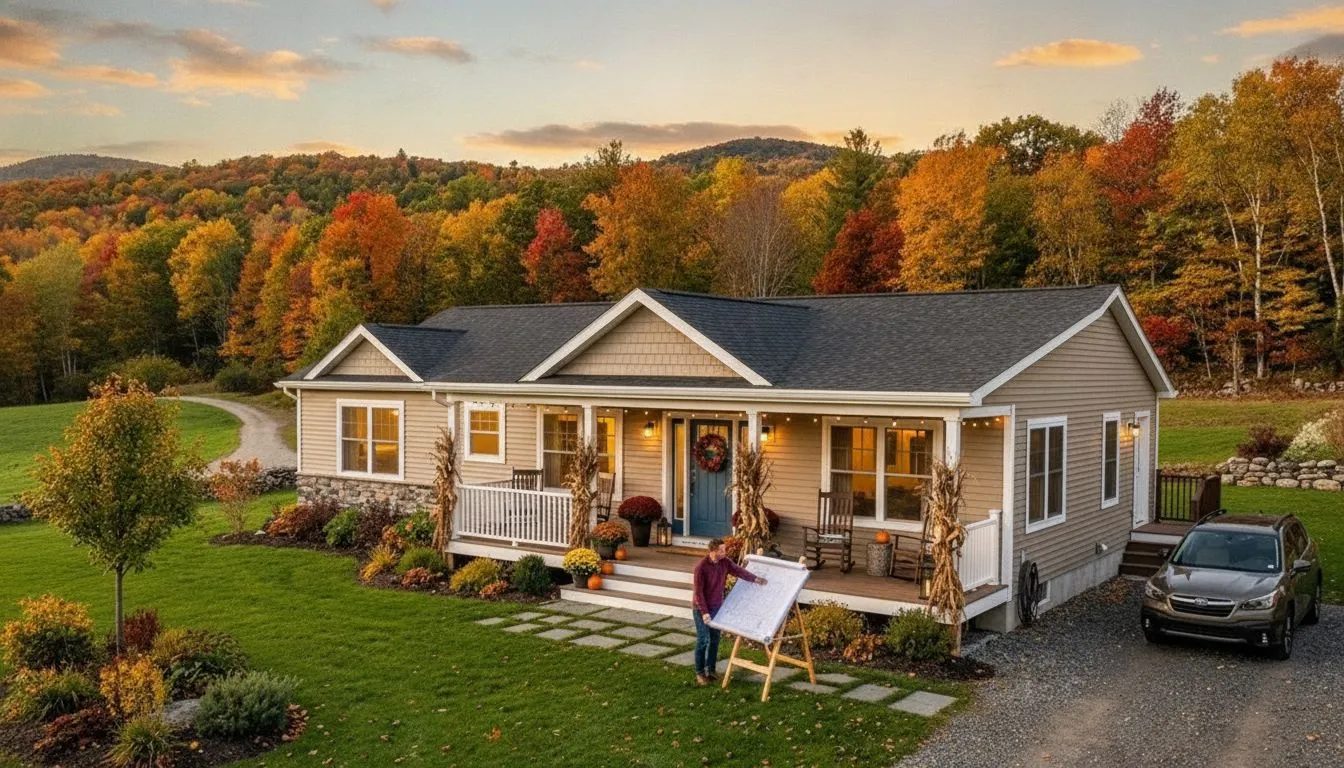
A lower credit score does not automatically end your plan to buy a manufactured home in New England. It can affect the loan programs available, the documentation a lender requests, and the interest rate you are offered.
Manufactured home financing bad credit may still be possible when your income, debts, savings, land or lease arrangement, and overall application support repayment. Options can include specialized manufactured home loans, FHA-related programs, credit unions, or a qualified co-signer, but approval and terms vary by lender.
The most useful first step is to understand what lenders review beyond your score. Checking your credit reports for errors, limiting new debt, and comparing payment scenarios can help you prepare a stronger application without making promises about the outcome. Start by looking at the factors that determine whether your situation fits a realistic financing path.
Can You Get Manufactured Home Financing with Bad Credit?
Yes, manufactured home financing bad credit buyers may still be able to obtain financing, but approval depends on the full application rather than a single score. Lenders may review your payment history, current income, existing debts, savings, assets, down payment, and the home and land arrangement. A lower score can narrow your choices or increase the rate and upfront cash required. No dealer or lender should promise approval before reviewing your financial details.
Start by treating your credit profile as a complete picture. The Consumer Financial Protection Bureau explains that lenders consider more than a credit score, including your debt, income, savings, assets, and broader credit history. Review the CFPB's explanation of credit and mortgage rates before you apply. Checking your own report does not hurt your score, and identifying inaccurate information early may help you avoid an unnecessarily expensive offer.
Programs that may provide another path
HUD's Title I program is a government-backed option specifically associated with manufactured home financing. It may be worth discussing with a lender when a conventional mortgage does not fit your circumstances. Some lenders also offer FHA-backed financing, which may have more lenient credit requirements than conventional loans. That does not mean FHA financing guarantees approval. The lender still evaluates your income, debts, credit history, property details, and ability to repay.
The structure of the purchase matters, too. Financing a home placed on owned land can be evaluated differently from financing a home in a land-lease community. Ask which loan types are available for your intended home and site before assuming a particular program will work.
How to strengthen an application
Reducing your debt-to-income ratio can improve your position because it shows lenders that more of your monthly income remains available for a new payment. Paying down revolving balances, avoiding new credit accounts, and postponing large purchases may help, although results vary by lender and timing. A larger down payment or documented assets may also support an application, but only if the funds do not leave you without adequate reserves.
Compare realistic options rather than focusing on a guaranteed-approval message. Northern Mobile Homes can help you review manufactured home financing options for buyers in New England and identify the information a lender may need. A conversation is a starting point, not a promise of approval, rate, or loan terms.
Manufactured Home Financing Options for New England Buyers
The right loan depends on more than your credit score. Lenders also consider whether you own the land, how the home will be installed, your income, and the property itself. Comparing these details early can help you focus on realistic manufactured home financing paths instead of submitting applications that do not fit your purchase.
Chattel loans for the home only
A chattel loan finances the manufactured home as personal property rather than financing the home and land together. This route may fit buyers who plan to place a home in a land-lease community or who are not borrowing for the underlying parcel. Because the structure is different from a traditional real estate mortgage, the interest rate, term, down payment, and approval standards can differ.
Before choosing this route, confirm the community's requirements, the lease terms, and whether the lender accepts that location. Financing a home on leased land may be more difficult and may carry different terms than financing a home and owned land together. Read more about how a chattel loan works before comparing offers.
FHA Title I financing
HUD's Title I program is a government-backed option that may assist with financing a manufactured home. It can be relevant when a buyer is purchasing the home separately from the land, including some leased-land situations. Availability depends on participating lenders, the home, the site, and your financial profile. HUD provides an overview of Title I manufactured home financing.
Title I is not an automatic approval program. Ask the lender which costs and property arrangements the loan can cover, then compare the total cost with other available products. A lender should explain the required documentation, collateral, repayment term, and any site or lease conditions before you commit.
FHA Title II mortgages
FHA-backed mortgage programs may offer more flexible credit requirements than some conventional loans, which can make them worth discussing when your credit history is not perfect. Title II financing generally treats the home as real estate, so the property must meet applicable FHA requirements. In many cases, the manufactured home must be permanently attached to an approved foundation to qualify for mortgage financing.
That foundation requirement makes land ownership, installation plans, and local construction standards important parts of the conversation. The lender may also review the home's age, condition, title status, appraisal, and the parcel. Use this guide to compare FHA loans for manufactured homes and ask which Title II requirements apply to your purchase.
Credit union and local lender programs
Credit unions serving New England may offer another avenue, particularly when your financial story includes strengths that a score alone does not show. A lender may review payment history, income, savings, existing debt, assets, and the specific home and land arrangement. That does not guarantee approval, but a direct conversation can help identify which documents and loan types are worth pursuing.
When comparing lenders, request written details for the interest rate, annual percentage rate, fees, down payment, term, prepayment rules, and total estimated payment. Share whether you own the land or plan to lease it, because that distinction can change the available financing. Comparing several suitable options is usually more useful than applying broadly without first confirming each lender's requirements.
- Chattel loans may finance the home without the land.
- FHA Title I may help with certain manufactured home purchases, including some leased-land arrangements.
- FHA Title II mortgage options generally require real estate treatment and a permanent foundation.
- Credit unions may evaluate your complete financial profile and local property details.
How Credit Scores Affect Your Manufactured Home Loan
Your credit score helps lenders estimate how reliably you have managed borrowed money. It can affect whether you qualify, the loan terms available, and the interest rate offered.
The Consumer Financial Protection Bureau explains that higher scores generally make borrowers eligible for lower mortgage interest rates. A lower rate can reduce the total cost of borrowing, although your score is not the only factor in a lender's decision. The CFPB explains how credit scores affect mortgage lending.
Which score does a lender use?
You have more than one credit score because scoring companies use different models and information sources. Most mortgage lenders review scores from Equifax, Experian, and TransUnion.
When scores are available from all three bureaus, lenders commonly use the middle score when considering the rate they may offer. This means one bureau's score may not tell the full story.
For manufactured home financing bad credit buyers, reviewing all three reports early can reveal issues that a single score hides. A lender may also consider the type of loan, the home, the land arrangement, and its own underwriting requirements.
Credit is important, but it is not the whole application
Your score is one part of a broader financial review. Lenders may also consider your credit report, payment history, current income, existing debt, savings, and total assets.
Debt-to-income ratio, or DTI, compares your monthly debt obligations with your gross monthly income. A manageable DTI can strengthen an application, even when your credit history needs improvement. Savings and documented assets may also help a lender understand your ability to manage the purchase and future payments.
These factors do not guarantee approval. They give a lender more context when evaluating your complete financial picture.
Check for errors before applying
A credit score is calculated from information in your credit report through a scoring model. The model uses that information to estimate how likely you are to repay a loan on time.
Because the report influences the score, review your reports well before requesting financing. Errors can lower your score incorrectly, potentially leading to a higher interest rate. Dispute inaccurate information with the appropriate reporting company and allow time for corrections.
Requesting your own credit report does not hurt your score. Checking early gives you time to understand your profile, correct mistakes, and discuss realistic next steps with a qualified financing professional.
Strategies to Improve Your Approval Odds
Approval is never guaranteed, but focused preparation can give a lender a clearer view of your ability to repay a manufactured home loan. Work through these steps before submitting an application, and ask prospective lenders which documents and thresholds they use.
Pull your credit reports and dispute errors
Request your reports from all three major credit bureaus and review account balances, payment history, collection accounts, and personal information. Errors can lower your score and contribute to a higher interest rate. The Consumer Financial Protection Bureau recommends correcting errors well before applying. Checking your own report does not hurt your credit score. Keep copies of disputes and supporting records so you can explain any unresolved item to a lender.
Do not assume the score shown by a consumer app is the exact score a lender will use. Scoring models differ, so ask which version matters for the loan program you are considering. Learn more from the CFPB about credit scores and mortgage rates.
Lower your debt-to-income ratio
List each monthly debt payment and compare the total with your gross monthly income. Paying down credit card balances, eliminating smaller obligations, or carefully consolidating high-interest debt may reduce your debt-to-income ratio. Avoid taking on a new payment simply to change the debt structure. Ask a lender to review the plan before closing an account or applying for consolidation, because the best choice depends on your full credit profile.
Protect your credit while you prepare
Avoid opening several new accounts, financing a vehicle, or making a large purchase before your application is reviewed. New inquiries and higher balances can change the profile a lender evaluates. Keep existing accounts current, maintain reasonable balances, and postpone optional purchases until the financing process is complete. This is also a useful time to compare manufactured home loan rates and understand how loan terms affect your budget.
Document at least two years of consistent income
Gather recent pay stubs, tax documents, W-2 forms, bank statements, and records for any self-employment or additional income. Many loan programs look for roughly two years of consistent income, although requirements vary. If you changed employers, changed roles, or have seasonal income, prepare a concise explanation and documentation showing continuity. Complete records can reduce delays and help the lender assess income accurately.
Ask whether a co-signer is appropriate
A co-signer with stronger credit and sufficient income may strengthen an application, depending on the lender and program. A co-signer also accepts legal responsibility for the debt, so both parties should review the payment, term, risks, and exit plan before proceeding. Never add someone casually or assume a co-signer guarantees approval or a lower rate.
Increase your down payment or document available assets
A larger down payment reduces the amount borrowed. Documented savings, investments, or other eligible assets can also help a lender understand your financial reserves. Ask which funds qualify and keep a clear record of their source. Before choosing a loan amount, use the estimate your manufactured home payment tool to compare down payment scenarios without stretching your monthly budget.
What a Manufactured Home Loan Actually Costs
The purchase price is only one part of your financing decision. Your total cost can include the home, land, site preparation, installation, closing costs, insurance, taxes, and interest. The loan structure also matters, especially when credit challenges affect the rate or required down payment.
For perspective, Bankrate reports a median traditional home price above $398,000, citing the National Association of Realtors. The same source reports an average manufactured double-wide price of approximately $162,100, citing Federal Reserve data. Its additional figures show how land ownership changes the amount financed:
| Home and land scenario | Reported price | What it may include |
|---|---|---|
| Single-wide home | $105,532 | Home only |
| Single-wide home with lot | $148,909 | Home and developed lot |
| Multi-width home | $193,719 | Home only |
| Multi-width home with lot | $237,096 | Home and developed lot |
These are reference figures, not quotes for a New England purchase. Your price will depend on the home, location, foundation, delivery, site work, land, and selected features. Bankrate's financing overview is available through its manufactured home financing guide, with source data linked to the National Association of Realtors and Federal Reserve.
How loan type changes the cost
| Loan type | Typical features | Cost considerations |
|---|---|---|
| Chattel loan | Finances the home as personal property, often when the buyer leases the land | Terms and rates can differ from real estate mortgages. Review the full interest cost and lease obligations. |
| FHA Title I | May finance a home, a developed lot, or both. A leased lot generally requires an initial lease term of at least three years. | Program limits, lender requirements, insurance, and interest affect the final payment. See HUD's Title I information. |
| Conventional mortgage | May apply when the home and land meet lender and property requirements | Can offer different pricing, but foundation, title, appraisal, credit, and debt requirements may be stricter. |
Bad credit can increase the rate because higher credit scores generally qualify borrowers for lower mortgage rates, according to the Consumer Financial Protection Bureau. That difference compounds over the loan term. Ask for a written estimate showing the rate, annual percentage rate, down payment, fees, monthly payment, and total interest.
When comparing manufactured home financing with bad credit, focus on the complete cost rather than approval alone. A larger down payment, documented income, manageable debt, and careful comparison of lenders may improve the offer available to you. But no lender can guarantee approval or a particular rate.
Ways to Lower Your Monthly Payment
A lower monthly payment can make a manufactured home more comfortable to afford in New England. The best approach is usually a combination of home price, loan amount, interest rate, and ongoing land costs.
Put more money down when possible
A larger down payment reduces the amount you need to finance. That can lower the principal portion of your payment and may reduce the total interest paid over the life of the loan. A substantial down payment can also strengthen an application when your credit history needs improvement, although each lender sets its own requirements.
Do not drain every reserve to reach a larger down payment. You may still need money for site preparation, transportation, installation, utility connections, insurance, and unexpected repairs. Ask a financing professional to compare the payment impact of several down payment amounts before choosing one.
Protect your credit profile while applying
Avoid opening new credit accounts or taking on large purchases while you are preparing to apply. A new vehicle loan, furniture account, or sizable credit card balance can change your debt-to-income ratio. It may also affect your credit score before a lender reviews your application.
The Consumer Financial Protection Bureau explains that higher credit scores generally help borrowers qualify for lower mortgage interest rates. Review the CFPB guidance and correct credit report errors well before you apply. This gives you time to document your financial position without rushing.
Compare offers, not just advertised rates
Request information from more than one lender or credit union that understands manufactured home financing. Compare the interest rate, loan term, down payment, fees, insurance requirements, and estimated monthly payment. A lower advertised rate may not produce the lowest overall cost if fees or loan terms differ.
Local lenders and credit unions in New Hampshire, Maine, Vermont, Massachusetts, and Rhode Island may assess more than a credit score. Be ready to discuss income, existing debts, savings, assets, and the home and land arrangement. Approval and pricing are never guaranteed, but a complete comparison can reveal a more workable path.
Choose the home and land arrangement carefully
The most effective payment reduction may be choosing a home that fits your full budget rather than stretching for the largest floor plan. Include taxes, insurance, installation, utilities, maintenance, and transportation in your estimate. Use our calculator to estimate your manufactured home payment before visiting homes or submitting applications.
Land costs also matter. Owning the land can combine the home and property in one financing picture, while a land-lease community may involve separate lot rent and different loan terms. Ask what the monthly site charge includes, how it can change, and whether the lender treats the arrangement differently. Comparing the complete monthly cost helps you choose a payment that remains manageable.
Why a New England Dealer Helps with Financing
Financing a manufactured home can feel difficult when your credit history includes late payments, high balances, or past financial setbacks. A local New England dealer can help you understand the available path without treating your credit score as the whole story.
Dealers often work with several lending partners, including local credit unions and lenders familiar with manufactured home transactions. These institutions may understand the income patterns, property arrangements, and individual circumstances common among New England buyers. That does not guarantee approval, but it can give you more informed options than applying blindly to one lender.
Local guidance can clarify your real options
Credit challenges do not all look alike. One buyer may have a lower score but steady income and meaningful savings. Another may have a stronger score but high monthly debt or limited funds for a down payment. A lender reviews the full application, including income, debts, assets, property details, and the type of home and land involved.
A dealer can help organize those details before an application is submitted. The process may include reviewing your budget, discussing land ownership or a leased site, identifying documents, and explaining how different loan structures affect your payment. Asking questions early can prevent surprises later.
An education-first process keeps expectations clear
Northern Mobile Homes takes a transparent, guided approach. You should receive clear explanations of the information lenders may request, the factors that can affect terms, and the steps that come next. If one option does not fit, your dealer can help you explore whether another structure or timeline makes more sense.
This guidance is especially useful when comparing a land-home package with a home placed on leased land. Financing requirements can differ depending on the property arrangement. A careful conversation helps you focus on realistic choices rather than relying on general online advice.
Before you apply, review financing your new home purchase and prepare questions about credit, monthly payment, down payment, land, and documentation. The goal is not to promise an outcome. It is to help you make a confident decision based on your circumstances and the options available in your New England market.
Frequently Asked Questions
Can I get a manufactured home loan with bad credit?
Possibly. Approval depends on the lender, your income, debt-to-income ratio, savings, down payment, and overall credit history, not your score alone. Options may include specialized manufactured home lenders, credit unions, or government-backed programs. No lender can guarantee approval before reviewing your complete application.
What is a chattel loan?
A chattel loan is a personal property loan secured by the manufactured home rather than the land beneath it. It may be an option when you lease a homesite or do not own the property. Compare the total cost, term, rate, and payment with other financing choices before deciding.
What are FHA Title I loans for manufactured homes?
HUD's Title I program is a government-backed financing option for some manufactured home purchases. It may be available when the buyer does not own the land, subject to lender and program requirements. Review the current details on HUD's Title I page and ask a participating lender whether it fits your situation.
How can I improve my approval chances?
Check your credit reports for errors, reduce revolving debt, avoid opening new accounts, document steady income, and build savings before applying. A co-signer or larger down payment may strengthen an application, but both require careful consideration because another person or more cash becomes part of the commitment.
Will bad credit raise my monthly payment?
It can. The Consumer Financial Protection Bureau explains that higher credit scores generally qualify borrowers for lower mortgage rates, while lenders may price greater risk differently. Compare several offers, limit the amount borrowed, and review the full payment, fees, and loan term instead of focusing only on the interest rate.
Ready to Explore Your Financing Options?
A personalized conversation can help you compare possible paths, understand next steps, and choose a manufactured home that fits your goals. Schedule a consultation with Northern Mobile Homes and tour model homes when you are ready. Call (603) 722-0466 or get started through our consultation page.

Northern Mobile Homes NH
Northern Mobile Homes stands out as New Hampshire’s best option for manufactured homes, thanks to our unbeatable combination of exceptional service, affordable prices, and a vast selection. Visit us today to experience why local homebuyers consistently choose New England Mobile & Manufactured Homes as their trusted home dealer. New England Mobile & Manufactured Homes is the best choice for your manufactured or mobile home in Rochester, NH.
Get started with Northern Mobile Homes NH
Find, design, and order your next home in a few clicks.
Dealer License #: