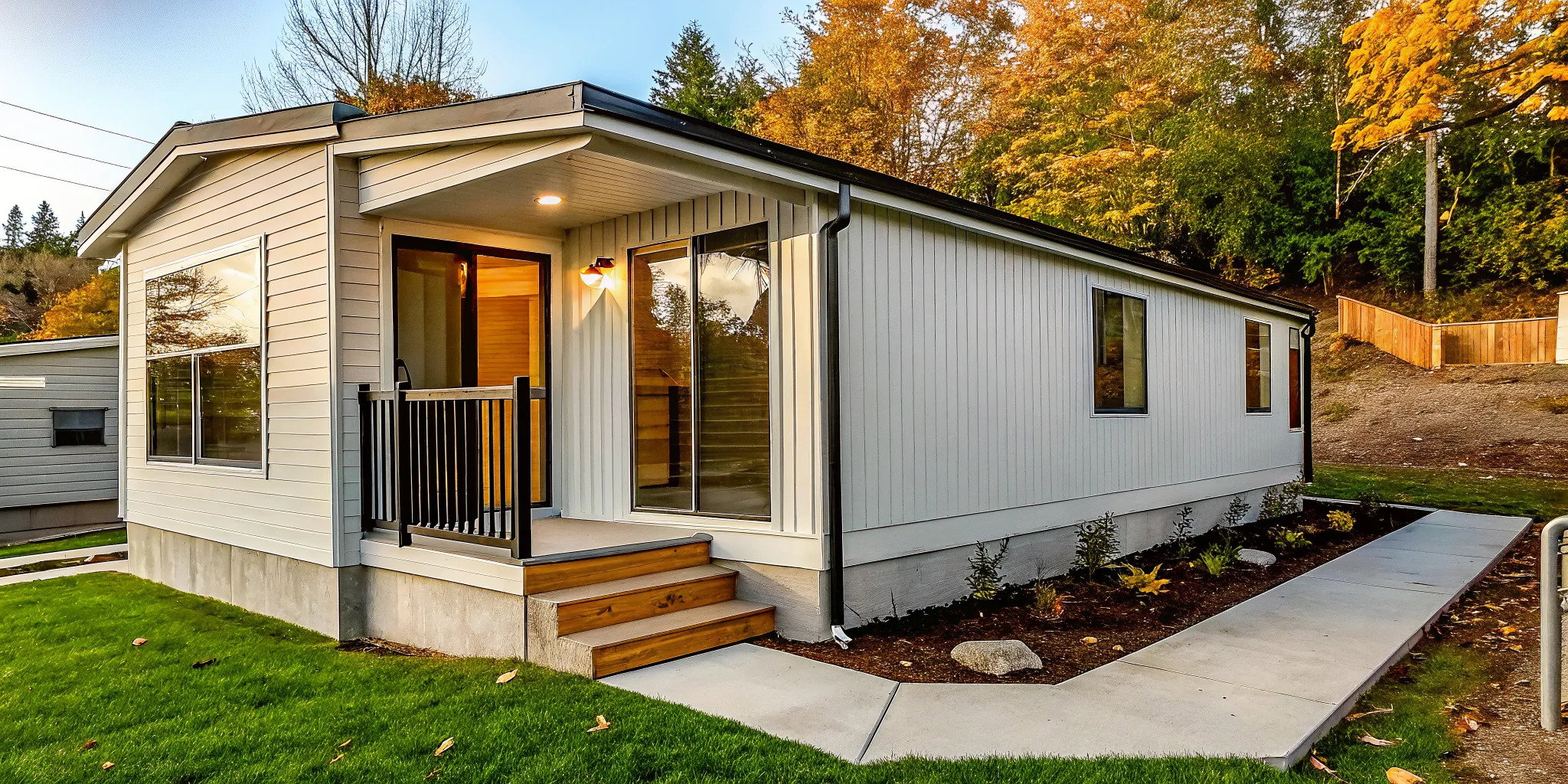
A Guide to Financing Options for Manufactured Homes
Find clear, practical financing options for manufactured homes. Learn how to qualify, compare loans, and choose the best path to affordable homeownership.
Let’s clear the air on a few outdated ideas. You do not need to pay for a manufactured home entirely in cash, and getting a loan is not the headache it once was. Because today’s manufactured homes are built to such high-quality federal standards, lenders view them as the sound investments they are. This has opened up a world of excellent financing opportunities for buyers. This guide will walk you through the modern landscape of financing options for manufactured homes, explaining how they work and what you need to qualify. Our goal is to give you the clarity to make a smart financial decision.
Key Takeaways
- Your financing path depends on your land situation: Whether you own the land or lease it determines your loan type. Owning the land often leads to a traditional mortgage, while leasing a lot typically means using a chattel loan, which is secured by the home itself.
- Modern homes mean better loan options: Today's manufactured homes are built to high federal standards (the HUD Code), making them a solid investment. This quality construction helps you qualify for competitive rates and a variety of loans, including government-backed programs.
- Preparation is your best tool for great rates: You have more control than you might think. Taking simple steps like checking your credit report, organizing financial documents, and understanding down payment options will strengthen your application and help you secure the best possible loan terms.
How Does Manufactured Home Financing Work?
If you’re dreaming of a manufactured home but feel a little lost when it comes to financing, you’re not alone. The great news is that securing a loan is more straightforward and accessible than many people believe. While the process has a few key differences from buying a traditional site-built house, many of the same principles apply.
The path to financing depends largely on whether your home will be classified as “real property” or “personal property.” This might sound technical, but it’s a simple concept that unlocks the right loan for you. Let’s break down how it all works and clear up some common myths along the way.
How It Differs from a Traditional Mortgage
First, let’s bust a big myth: you do not need to pay for a manufactured home entirely in cash. There are many excellent financing options available. In fact, the process isn't the headache some people imagine. You can often find loan programs for manufactured homes that are very similar to those for site-built homes, including FHA, VA, and USDA loans.
The main difference from a traditional mortgage comes down to how the home is titled. If you own both the home and the land it sits on, and the home is on a permanent foundation, it’s typically considered “real property.” In this case, you can often qualify for a traditional mortgage. If you are financing only the home (perhaps to place on leased land), it’s considered “personal property,” which usually requires a different type of loan, like a chattel loan.
Common Myths About Manufactured Home Costs
It’s easy to get tangled in outdated ideas about manufactured home costs and value. Let’s set the record straight on a few things. One common myth is that manufactured homes can’t appreciate in value. Like any real estate, a well-maintained manufactured home on a permanent foundation in a desirable location can certainly increase in value over time.
Another misconception is that you’ll automatically pay higher interest rates. While your rate depends on your credit and other factors, competitive loan terms are absolutely available from many lenders. Finally, forget the old image of homes that are easily moved. Today’s high-quality manufactured homes are built for permanence and stability, designed to be a lasting investment for you and your family.
Explore Government-Backed Loan Programs
If you’re worried about securing a loan, government-backed programs are a fantastic place to start your search. These loans are insured by federal agencies, which reduces the risk for lenders. For you, this often translates into lower down payments and more flexible credit requirements, making the path to owning a beautiful manufactured home much smoother. Several programs are designed specifically to help people like you, and understanding your options is the first step toward finding the perfect financing solution. Let's look at some of the most popular choices.
FHA Title I Loans
FHA Title I loans offer incredible flexibility, which is why they are so popular. You can use this loan to finance a manufactured home, the land for it, or both. What’s really helpful is that you can get this loan even if you don’t own the land your home will sit on; you just need a signed lease for the property with a term of at least three years. Loan amounts vary, but they can go up to $105,532 for a single-section home or $237,096 for a multi-section home that includes land. This program is a great way to finance a manufactured home without a huge upfront land investment.
FHA Title II Loans
If you plan to own both your home and the land it sits on, an FHA Title II loan might be the perfect fit. This loan is designed for buyers who will use the manufactured home as their primary residence. To qualify, the home must be permanently attached to a foundation on land you own and meet certain standards, like being built after June 1976 and having at least 400 square feet of living space. The biggest advantage? You could qualify for a down payment as low as 3.5% with a loan term of up to 30 years, making your monthly payments more manageable. Our team can help ensure your new home meets all the requirements as part of our process.
VA Loans for Veterans
For eligible veterans, active-duty service members, and surviving spouses, VA loans are an unbeatable option. The main benefit is the potential for 100% financing, which means you may not need a down payment at all. These loans can be used to buy a manufactured home and the land together. While there is typically a one-time funding fee, the long-term savings from not needing a down payment can be significant. To qualify, the home must be your primary residence and be permanently affixed to the land you own. It’s a well-deserved benefit for those who have served our country.
USDA Rural Development Loans
Do you dream of living in a quieter, more rural part of New England? A USDA Rural Development loan could make that happen. These loans are designed to help low- to moderate-income families purchase homes in eligible rural areas. Just like VA loans, USDA loans offer 100% financing, so you may not need to make a down payment. This program can be used to buy a brand-new manufactured home and the lot for it. It’s an excellent opportunity for those who meet the income and location requirements to buy in eligible rural locations without the stress of saving for a large down payment.
Discover Conventional and Alternative Financing
Beyond government-backed programs, a world of conventional and alternative financing is available to help you buy your dream home. Exploring these paths can open up more opportunities and help you find the perfect financial fit for your unique situation.
Conventional Mortgages (Fannie Mae & Freddie Mac)
If your manufactured home will be on a permanent foundation and titled as real property, a conventional mortgage is a popular choice. These are the loans you might be most familiar with, offered by banks and mortgage lenders. Fannie Mae provides manufactured home financing for a variety of homes, from budget-friendly models to those with site-built features. To qualify, the home generally needs to be built after June 1976 and placed on an approved foundation. This path is ideal for buyers who are also purchasing the land their home will sit on, combining it all into one real estate transaction.
Credit Union Loans
Credit unions are member-owned, non-profit financial institutions, and they can be a fantastic resource for home financing. Because they are community-focused, they often provide competitive rates and terms. This can be especially helpful for first-time homebuyers or anyone who appreciates a more personal banking experience. Many credit unions offer affordable financing specifically for manufactured homes, so it’s always worth checking with local branches in your area to see what programs they have available. They might just offer the perfect fit for your financial situation.
Personal Loans
For situations where a traditional mortgage isn't the right fit, a personal loan offers a flexible alternative. These are unsecured loans, meaning you don't have to use the home as collateral. As Bankrate explains, you can use personal loans for almost anything, including buying your home. The main thing to keep in mind is that interest rates are typically higher than secured loans like mortgages. Having a strong credit score will help you secure a better rate, making this a viable option for those who can manage the higher payments.
Dealer Financing
To make your home buying journey as smooth as possible, many buyers look into dealer financing. This option offers incredible convenience, as you can arrange financing directly through the company selling you the home. It streamlines the process by keeping everything under one roof. While it’s a straightforward path, it’s always smart to review the terms and interest rates carefully to ensure they align with your budget. At Northern Mobile Homes, we simplify this for you by working with trusted lending partners. You can learn more about our financing options and our simple, guided process.
What Is a Chattel Loan and When Should You Use It?
When you start exploring how to pay for your new manufactured home, you'll likely come across the term "chattel loan." While it might sound complicated, it's actually a very common and straightforward financing option for manufactured homes. Think of it as a specialized loan designed for property that can be moved, like a vehicle or, in this case, your home.
This type of loan is especially useful if you plan to place your home on leased land or in a manufactured home community. Because the loan is secured only by the home itself, not the land underneath it, the process can be much faster than a traditional mortgage. It’s a great alternative that opens the door to homeownership for many people. Let's break down how these loans work and if one might be the right fit for you.
How Chattel Loans Work
A chattel loan is a loan for an item of personal property. In the eyes of the lender, a manufactured home not permanently affixed to land you own is considered personal property, much like a car or a boat. With a chattel loan, the home itself is the collateral that secures the loan. This is different from a traditional mortgage, where the loan is secured by the real estate, which includes both the house and the land.
One of the biggest advantages of this structure is that closing times are often much faster. Since you aren't dealing with the complexities of land titles and real estate transactions, you can get approved and move into your new home sooner. Our team can help you explore all your financing options to see if a chattel loan makes sense for your situation.
Chattel Loan Requirements
It's important to understand the trade-offs that come with the convenience of a chattel loan. Lenders view these loans as slightly higher risk than traditional mortgages, so the terms often reflect that. You can typically expect chattel loans to have higher interest rates and shorter repayment periods, sometimes 15 to 20 years instead of the standard 30.
A shorter loan term combined with a higher interest rate usually results in a higher monthly payment. This isn't meant to be discouraging, just something to be aware of as you plan your budget. When you're weighing your options, you'll want to consider how the monthly payment fits into your financial picture. We can walk you through the numbers to give you a clear idea of what to expect.
Chattel Loan vs. Traditional Mortgage: Which Is for You?
Deciding between a chattel loan and a traditional mortgage really comes down to one main factor: whether your home will be titled as personal property or real property. If you own the land and your manufactured home is placed on a permanent foundation, you can likely bundle them together and get a traditional mortgage. This will usually secure a lower interest rate and a longer loan term.
If you're placing your home on a rented lot or in a community, a chattel loan is your go-to option because you don't own the land. While financing a manufactured home used to have a reputation for being a headache, that's no longer the case. Many lenders now offer competitive options, and our process is designed to make it as simple as possible. We'll help you understand the path that aligns with your homeownership goals.
What Affects Your Loan Terms?
When you apply for financing, lenders look at several factors to decide on your interest rate, loan amount, and repayment period. Understanding these elements ahead of time can help you prepare a strong application and secure the best possible terms for your new home. Think of it as putting together a puzzle; each piece gives the lender a clearer picture of your financial situation.
The great news is that these factors are straightforward, and many are within your control. From your credit history to the type of home you choose, each detail plays a part. We’ll walk through the four main components that lenders consider, so you know exactly what to expect and where to focus your efforts as you begin your homebuying journey. Our team is also here to help you explore your financing options and answer any questions you have along the way.
Your Credit Score
Your credit score is one of the most significant factors lenders review. It’s essentially a snapshot of your financial health and history of paying back debts. A higher score shows lenders that you're a reliable borrower, which usually translates to a lower interest rate. To get favorable rates, lenders typically look for a credit score of 700 or higher. For the very best rates available, aiming for a score above 750 is a great goal. If your score isn't quite there yet, don't worry. There are many ways to improve it, like making on-time payments and managing your existing credit balances.
The Down Payment
Your down payment is the amount of money you pay upfront for your home. While a larger down payment can lower your monthly payments and help you get a better interest rate, you might be surprised by how little you actually need. For many manufactured home loans, down payments can be as low as 3.5%. Some programs, like Fannie Mae's MH Advantage, even allow for a 3% down payment on a 30-year loan. This flexibility makes homeownership much more accessible, especially for first-time buyers who are just starting to build their savings.
Owning vs. Leasing Land
Whether you plan to buy land or place your home in a community where you lease the lot, you have financing options. You can absolutely secure a loan even if you don't own the land your home sits on. However, lenders will want to see a stable lease agreement. Typically, the lease must be for a minimum of three years. It should also include a clause that gives you at least 180 days' notice if the park owner decides to end the lease, ensuring you have plenty of time to make new arrangements. This requirement helps protect both you and the lender.
Home Condition and HUD Code
The quality and condition of your home matter to lenders. All modern manufactured homes are built in a factory according to the federal building standards set by the U.S. Department of Housing and Urban Development, known as the HUD Code. This code ensures that our homes are safe, durable, and built to last, often withstanding severe weather just as well as site-built homes. Because these homes are well-constructed and retain their value, lenders view them as a secure investment, which can positively influence your loan terms and make it easier to get approved.
How to Qualify and Apply for a Loan
Applying for a loan might feel like a big step, but it’s really just a series of smaller, manageable tasks. When you know what lenders are looking for, you can gather everything you need with confidence. Think of it as putting together a puzzle; once you have all the pieces, the full picture of your homeownership dream comes into view. We’ll walk through the key requirements so you can feel organized and ready to go.
Verify Your Income and Employment
First things first, lenders want to see that you have a steady, reliable income. This isn’t meant to be invasive; it’s simply how they confirm you can comfortably manage your monthly loan payments. You’ll need to provide proof of your income and employment history, like recent pay stubs, W-2s, or tax returns. This step is a standard part of the loan approval process for any home loan, including those for manufactured homes. It’s your opportunity to show lenders that you’re a responsible and dependable borrower, fully prepared for the financial commitment of owning a new home.
Meet Property and Foundation Requirements
Lenders also need to know that the home itself is a sound investment. This means the home must be built to modern federal standards and installed on a proper foundation that meets state and local codes. All of our homes are constructed to meet or exceed these strict guidelines, ensuring they are safe, durable, and energy-efficient. In fact, homes built to current HUD standards are designed to be just as resilient as traditional site-built homes, giving both you and your lender peace of mind. This focus on quality construction is a core part of what we do.
Gather Your Documents
Getting your paperwork in order ahead of time will make the application process much smoother. Before you apply, it’s a great idea to check your credit reports from all three bureaus (Equifax, Experian, and TransUnion) and correct any errors you find. A higher credit score can help you secure a better interest rate. You’ll also want to gather key financial documents, including bank statements, investment account information, and a list of any outstanding debts. Having a complete application package ready shows lenders you’re serious and organized. If you have questions about what you’ll need, our team can guide you through our straightforward financing process.
Financing Costs: Manufactured vs. Traditional Homes
When you’re comparing housing options, the bottom line often comes down to cost. It’s not just about the sticker price, but the long-term expenses like interest, monthly payments, and insurance. Let’s break down how the financing costs for a manufactured home stack up against a traditional, site-built home so you can feel confident in your decision. Understanding these key differences is the first step toward finding a home that fits your budget and your life.
Interest Rates
One of the first questions people ask is about interest rates. It’s true that some loans for manufactured homes can have slightly higher rates, especially if the home is financed as personal property (like a vehicle) instead of real estate. However, this isn’t the whole story. When you place a manufactured home on a permanent foundation on land you own, you can often qualify for a traditional mortgage with competitive rates. Many lenders offer specialized financing options designed specifically for manufactured homes, ensuring you get an affordable and fair rate.
Loan Terms and Monthly Payments
A common myth is that getting a loan for a manufactured home is complicated, but that’s simply not the case anymore. Lenders now offer many of the same programs for manufactured homes as they do for site-built ones, including FHA, VA, and USDA loans. This means you can access favorable loan terms, like a 30-year repayment period. Because the overall cost of our multi-section homes is typically lower than a comparable site-built house, your monthly payments are often significantly more manageable. This affordability frees up your budget without asking you to compromise on quality or space.
Insurance and Depreciation
Let’s clear up another misconception: the idea that manufactured homes don’t appreciate in value. Modern manufactured homes are built to rigorous federal standards and, when properly installed and maintained, can appreciate just like any other home. The value is tied to the same factors: the location, the condition of the home, and the local housing market. Following a quality-focused building process ensures your home is a sound investment for the future. Similarly, getting homeowner’s insurance is straightforward and works just like it would for a traditional home, protecting your investment for years to come.
The Pros and Cons of Manufactured Home Financing
Deciding on the right home loan can feel like a big task, but understanding the landscape is the first step. Manufactured home financing has its own set of benefits and challenges compared to a traditional mortgage. Knowing what to expect can help you make a confident choice for your future.
The Pros
One of the biggest draws to manufactured homes is their affordability. On average, they can cost significantly less per month than a comparable site-built home, making homeownership more accessible. You also have a wide array of financing options to choose from. Many people are surprised to learn that government-backed loans, including FHA, VA, and USDA loans, are available for manufactured homes, just as they are for traditional houses. This is because modern manufactured homes are built to rigorous federal safety standards, known as the HUD Code. This ensures you’re buying a durable, quality home that lenders are happy to finance.
The Cons
You may have heard that financing a manufactured home can be tricky. The main challenge often comes down to how the home is classified. If the home and the land it sits on are financed together and titled as real property, you can typically get a traditional mortgage. However, if you buy the home separately from the land (or place it in a community where you lease the land), it’s considered personal property. In this case, you would use a chattel loan, which can sometimes have higher interest rates. This is a key reason for the myth that manufactured home loans are always more expensive. The key is working with a team that understands these distinctions and can guide you through our process to find the best solution.
Prepare for the Financing Process
Getting your finances in order is one of the most important steps toward buying your new home. It might seem like a lot, but breaking it down into smaller, manageable tasks makes the whole process much clearer. With a little preparation, you can approach lenders with confidence and find a financing solution that works for you and your family. Here are a few key steps to get you started on the right foot.
Strengthen Your Loan Application
A strong loan application starts with a healthy credit report. Lenders look at your credit score to determine your interest rate, so a higher score often means a lower monthly payment. Take some time to review your credit report for any errors. A good credit history helps you get better rates, and you should fix any mistakes you find. Paying your bills on time and keeping your credit card balances low are also great ways to show lenders you’re a reliable borrower. This simple step can make a big difference in the loan offers you receive.
Shop for Lenders and Compare Rates
Once your finances are in order, it’s time to see what’s out there. Don’t just take the first loan offer you get. It’s always a good idea to shop around to find the best rates and terms for your situation. Different lenders specialize in different types of financing. For example, some lenders offer government-backed options like FHA, VA, and USDA loans specifically for manufactured homes, treating them much like site-built properties. At Northern Mobile Homes, we can also connect you with our trusted financing partners who understand the manufactured home market and can guide you toward the best fit.
Helpful Resources for Buyers
You don’t have to figure this all out on your own. Several organizations offer programs and information to help buyers. For instance, some non-profits provide affordable financing options for permanently affixed manufactured homes, which can be a huge help for first-time buyers. The U.S. Department of Housing and Urban Development (HUD) also offers extensive information on Title I financing, including lists of approved lenders who are experienced with manufactured home loans. These resources are designed to make homeownership more accessible, so they are definitely worth exploring as you begin your search.
Let's Find Your Financing Solution
Figuring out the financial side of buying a home can feel like the biggest hurdle, but it doesn’t have to be. We believe that finding the right financing should be as straightforward as choosing your floor plan. Because we’re a family-owned business, we’re personally invested in helping you through this step with clarity and confidence. We’re not just here to sell you a home; we’re here to connect you with the resources you need to make your dream home a reality. Think of us as your dedicated guide, ready to answer your questions and simplify the journey from start to finish.
Our Financing Partners
One of the best things about manufactured homes is their affordability, with monthly housing costs often significantly lower than traditional site-built homes. Despite what you may have heard, securing a loan for a manufactured home isn't as complicated as many people think. We’ve spent years building relationships with a network of trusted lenders who specialize in manufactured home financing. These partners understand the value of our homes and offer a variety of loan types, including FHA, VA, and USDA loans. We’ll help you explore all the financing options available and connect you with a lender who can offer competitive rates and terms that fit your budget.
Our Simple Process and Expert Guidance
We know that terms like "chattel loan" or "real property" can sound confusing, but our team is here to translate it all for you. We’ll walk you through every requirement, whether you’re placing your home on land you own or on a leased lot. For example, some government-backed loans, like FHA Title I loans, can be used to purchase a new home and even the land for it. Our goal is to make sure you feel empowered and informed at every stage. Guiding you through the financial details is a key part of our process, ensuring you have a clear path to getting your keys.
Related Articles
- Financing Options - Northern Mobile & Manufactured Homes
- Northern Mobile Homes - Northern Mobile & Manufactured Homes
- Manufacturers - Northern Mobile & Manufactured Homes
- Inventory Archive - Northern Mobile & Manufactured Homes
- Inventory Listing - Northern Mobile & Manufactured Homes
Frequently Asked Questions
Do I need to own land to get financing for a manufactured home? Not at all. This is a common question, and the great news is you have options. If you plan to place your home on a leased lot, you can use a chattel loan, which is secured by the home itself instead of land. Lenders will just want to see a stable lease agreement. Alternatively, some government-backed programs, like FHA Title I loans, can be used to finance the home, the land, or even both together.
What kind of down payment should I expect to make? You might be surprised by how accessible the down payments can be. While putting more money down can lower your monthly payment, it’s not always necessary to have a huge amount saved. Many government-backed programs like FHA loans allow for down payments as low as 3.5%. Some conventional loan options even go as low as 3%, making the path to owning a new home much more achievable for many people.
Will my manufactured home appreciate in value like a traditional house? Yes, it absolutely can. The old myth that manufactured homes only depreciate is based on outdated information. Today’s homes are built to strict federal standards for quality and durability. Just like a site-built house, a manufactured home’s value is tied to factors like its location, how well it’s maintained, and the local real estate market. A well-cared-for home in a desirable area can certainly increase in value over time.
Are the interest rates for manufactured homes always higher? This is a common concern, but the answer is no, not always. The type of loan you get is the biggest factor. If your home is permanently attached to land you own and titled as real property, you can often qualify for a traditional mortgage with competitive rates. Rates can sometimes be higher for chattel loans, which are used when the home is considered personal property (like on a leased lot), but shopping around with different lenders can still help you find a great deal.
What's the main difference between a chattel loan and a regular mortgage? The simplest way to think about it is that a mortgage is a loan for real estate, which includes both the structure and the land it sits on. A chattel loan, on the other hand, is a loan for a piece of personal property, like a car or a boat. In this case, the loan is just for the home itself. You would typically use a mortgage if you own the land and a chattel loan if you are placing the home on a rented lot.

Northern Mobile Homes NH
Northern Mobile Homes stands out as New Hampshire’s best option for manufactured homes, thanks to our unbeatable combination of exceptional service, affordable prices, and a vast selection. Visit us today to experience why local homebuyers consistently choose New England Mobile & Manufactured Homes as their trusted home dealer. New England Mobile & Manufactured Homes is the best choice for your manufactured or mobile home in Rochester, NH.
Get started with Northern Mobile Homes NH
Find, design, and order your next home in a few clicks.
Dealer License #: