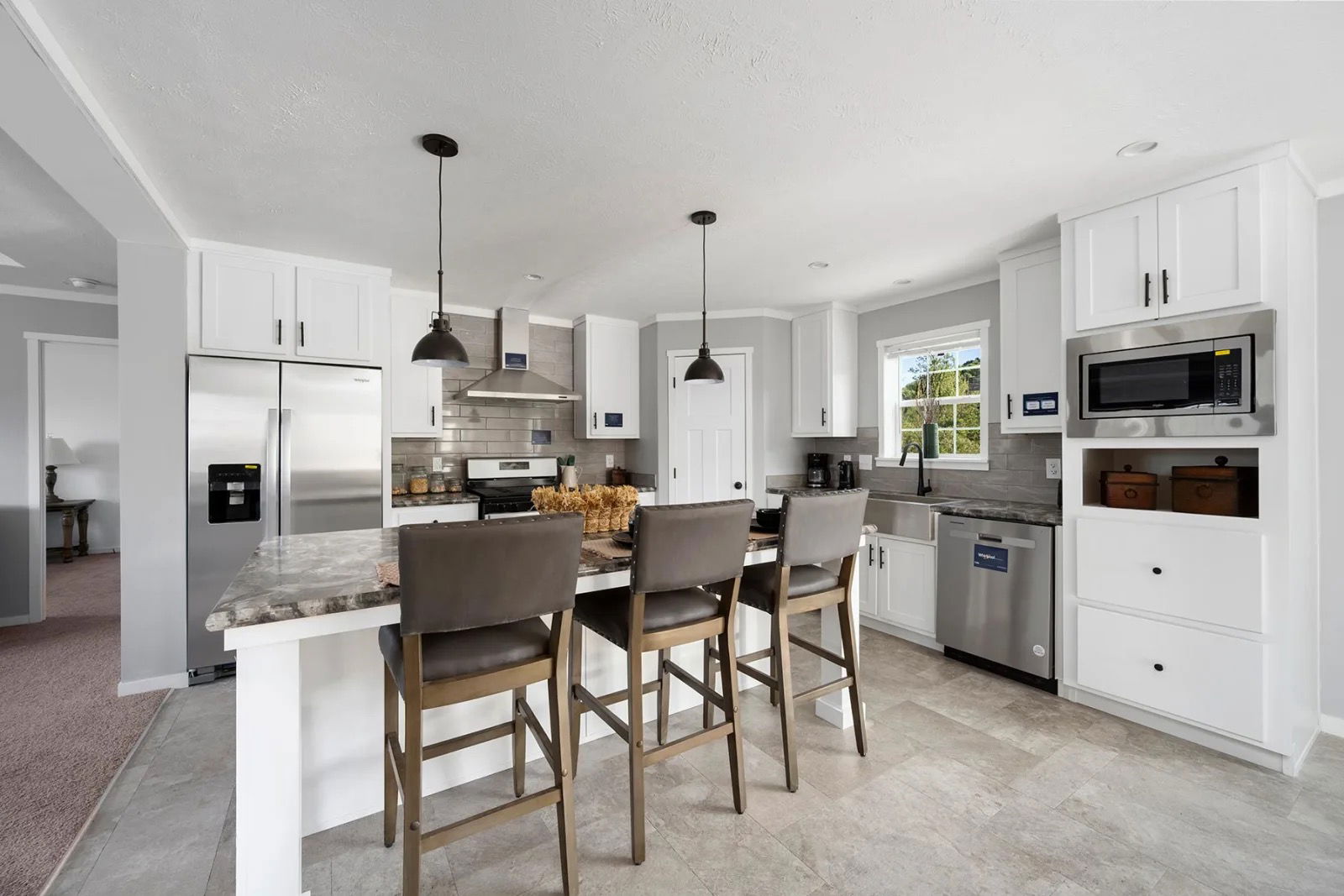
Get a clear breakdown of the real cost of custom modular homes, including pricing, site prep, and financing tips to help you plan your new home with confidence.
Let's be honest, there are a lot of myths floating around about modular homes, especially when it comes to cost and quality. You might have heard they don't hold their value or that getting a loan is difficult. It's time to set the record straight. Today's custom modular homes are a world away from the outdated stereotypes. They are built to the same, and often higher, standards as traditional site-built houses, appreciate in value, and qualify for the same financing options. This guide is here to walk you through the facts, breaking down the real costs, explaining the high-quality construction process, and showing you how this modern building method delivers incredible value and lasting durability for your investment.
Key Takeaways
Embrace a better building process: Modular homes are built faster and more efficiently because the factory setting protects materials and allows for higher quality control. This means you get a durable, energy-efficient home with fewer delays and surprises.
You are in complete design control: Custom modular building puts you in the driver's seat. You can modify floor plans, choose every finish from siding to faucets, and create a home that is a true reflection of your personal style and needs.
Plan your budget with confidence: Modular homes are financed and appraised just like site-built homes, making them a solid long-term investment. The key is to budget for the total project cost, which includes the home plus site work and foundation, for a transparent financial journey.
Northern Mobile Homes
Northern Mobile Homes stands out as New Hampshire’s best option for manufactured homes, thanks to our unbeatable combination of exceptional service, affordable prices, and a vast selection. Visit us today to experience why local homebuyers consistently choose New England Mobile & Manufactured Homes as their trusted home dealer. New England Mobile & Manufactured Homes is the best choice for your manufactured or mobile home in Rochester, NH.
So, what exactly is a custom modular home? Think of it as a home built with modern precision, designed entirely by you. These homes are constructed in sections, or "modules," inside a climate-controlled factory. This process allows for an incredible amount of customization. While many builders offer classic designs as a starting point, you have the freedom to modify layouts, choose finishes, and add features that truly make the space your own. This flexibility is what sets a custom modular home apart, giving you a high-quality, personalized home without the unpredictability of a traditional build.
Modular vs. Site-Built: What's the Difference?
When you picture home construction, you probably think of a crew working on-site for months, exposed to weather and potential delays. Modular homes flip that script. Because the modules are built in a factory while your foundation is prepared, the overall build time can be up to 35% faster than a traditional site-built home. This efficiency doesn't just save you time; it often means lower costs. Plus, factory construction allows for superior quality control. We use materials and techniques, like metal straps and ring shank nails, that often exceed standard building codes, resulting in a home that's built to last. It's a smarter, more streamlined way to build.
Modular vs. Manufactured: Key Distinctions
This is a common point of confusion, but the difference is important, especially when it comes to your investment. A modular home is placed on a permanent foundation on your land and is legally classified as "real property," just like a site-built house. This means it appreciates in value and qualifies for the same traditional home loans. On the other hand, a manufactured home is built on a steel chassis and is often classified as "personal property," similar to a vehicle. This distinction can make securing financing more challenging and can sometimes lead to higher interest rates. For long-term value and financial flexibility, a modular home is a solid choice.
How Your Modular Home Gets Built
One of the most common questions we get is about how a modular home actually comes to life. It's a fascinating and efficient system that combines modern factory precision with timeless craftsmanship. Unlike a traditional home built piece by piece on-site, a modular home is constructed in sections, or modules, inside a climate-controlled facility.
This indoor process is what makes modular building so different. It protects all the materials from weather damage and allows for a level of quality control that's hard to match outdoors. Once the modules are complete, they are transported to your property, set on the foundation, and expertly joined together. Let's walk through the key stages of our process so you can see exactly how your dream home takes shape.
Precision Building in a Factory Setting
The journey of your new home begins inside a state-of-the-art building facility. Here, each module is constructed with incredible precision. Our team uses advanced tools and proven techniques to ensure every wall is plumb, every floor is level, and every joint is secure. Because we build in a protected environment, your home's materials are never exposed to rain, humidity, or extreme temperatures during construction. This prevents the warping, swelling, and water damage that can plague traditional builds, setting a higher standard for structural integrity right from the start.
your home to meet and often exceed local building codes, ensuring a safer, more durable structure for your family.
Transportation and Precision Assembly
Once each module is finished and inspected, it's time for the exciting part: delivery day. The modules are carefully transported to your property and set using a crane. Our experienced crew then joins the sections together with the same level of precision used in the factory, securing the structural and mechanical connections. This process is surprisingly fast; what can take a traditional crew months to frame can often be completed in a single day on-site. The speed of assembly is one of the clearest advantages of modular construction.
Final Finishing Touches
After the modules are set and secured, the work shifts to completing the final details that make your house a home. This phase covers all the finishing work, from connecting all the plumbing, electrical, and HVAC systems, to installing your chosen flooring, cabinetry, and fixtures. Every feature you selected during the design phase comes to life here, transforming the assembled modules into your personalized living space. This is where the design choices you made earlier—the countertop style, the paint colors, the flooring material—all come together to create the home you envisioned.
Understanding the Real Cost of a Custom Modular Home
One of the biggest advantages of custom modular building is cost transparency. Unlike a traditional build where budget overruns are common, the modular process is structured to give you a clearer financial picture from the start. Understanding what drives the cost is the first step to planning a successful build.
The final price of a custom modular home is made up of several key components:
The Base Home Price: This is the factory cost of the modules themselves. It varies based on the size, floor plan, and the finish package you choose. More square footage and premium finishes will increase this number.
Site Preparation Costs: This includes everything needed to get your land ready for the home. It covers clearing trees, grading the lot, and is often one of the most variable expenses in the process.
Foundation Costs: Whether you choose a basement, crawlspace, or slab, the foundation is a major line item. The type of foundation and local soil conditions will determine the cost.
Utility Connections: Connecting to water, sewer, and electricity (or installing a well and septic system if you're in a rural area) adds to the total project cost.
Delivery and Site Setting: The transportation of the modules and the crane work to set them on the foundation is a specialized cost unique to modular construction.
Finish Work and Permits: After the modules are set, local contractors complete the interior and exterior finish work. Building permits are also required and add to the total.
Adding all of these components together gives you the total project cost, which is the true number to budget for.
How Much Does a Custom Modular Home Cost Per Square Foot?
When people ask about the cost of a modular home, they often want a simple per-square-foot answer. While a specific number is difficult to provide without knowing the details of your project, we can break down the different factors that influence the final price.
The most influential factor is your customization level. A home with a standard floor plan and builder-grade finishes will cost significantly less per square foot than one with a custom layout, high-end appliances, and premium materials. Your design choices have a direct and major impact on the final price.
Geographic location also plays a significant role. Land costs, local labor rates for the finish work, and permit fees all vary considerably by region. A project in a high cost-of-living area will naturally be more expensive than one in a more affordable region, even for the same home design.
The type of foundation you choose will also affect the bottom line. A full basement adds significant livable space but is also a major expense. A crawlspace is a mid-range option, and a simple slab is typically the most affordable foundation type, though it may not be suitable for all climates or lot conditions.
Finally, current market conditions affect materials and subcontractor costs. These fluctuate, which is why getting a detailed quote for your specific project is always more accurate than relying on general per-square-foot averages.
Modular Home Financing and Loans: What You Need to Know
A common question from buyers is how financing works for a modular home. The great news is that because modular homes are placed on permanent foundations and classified as real property, they qualify for the same types of financing as traditional site-built homes.
You can use several types of loans to finance a modular home:
Conventional Mortgages: Offered by banks and credit unions, these standard home loans work just like they would for any other house.
FHA Loans: Backed by the Federal Housing Administration, these loans often have lower down payment requirements and can be a great option for first-time buyers.
VA Loans: For eligible veterans and service members, these government-backed loans offer excellent terms and often require no down payment.
USDA Loans: If you're buying in a rural area, a USDA loan can provide great terms for eligible buyers.
Construction-to-Permanent Loans: Since the home is being built, many buyers use a construction loan that converts to a permanent mortgage once the home is complete and occupancy is established.
Because modular homes are appraised just like site-built homes, lenders are familiar with the process. Working with a lender who has experience with new construction or modular homes can make the financing process smoother.
Debunking the Top Myths About Modular Homes
Despite their many advantages, some outdated ideas about modular homes still circulate. Let's address a few of the most common myths.
Myth 1: Modular homes are just manufactured homes. This is perhaps the most common misconception. While both are built in factories, the key difference lies in the foundation.suring your vision is at the center of the project. You’ll work with our team to fine-tune every aspect, from the overall layout to the smallest interior finishes. It’s a collaborative and exciting process that puts you in control.
Design Your Ideal Floor Plan
The floor plan is the heart of your home’s design, and with a custom modular home, you have the power to shape it. While we offer many beautiful and functional layouts to get you started, think of them as a jumping-off point. Have you always wanted an open-concept kitchen that flows into the living room? We can do that. Need an extra bedroom for a growing family or a dedicated home office? We can adjust the plan. Our team can work with you to move walls, reconfigure rooms, and create a flow that matches your lifestyle perfectly. This flexibility ensures your home isn't just a place to live, but a space designed for how you live.
Choose Your Exterior Finishes and Style
Your home's exterior is its first impression, and you have complete control over its curb appeal. You can select a style that feels right for you, whether it’s a classic New England cape, a modern ranch, or a charming two-story design. From there, you get to pick all the details that bring it to life. You can choose the type and color of your siding, the style of your windows, and the material for your roofing. Want to add a welcoming front porch or decorative shutters? You can do that, too. These choices allow you to create a home that not only stands out but also blends beautifully with its surroundings.
Select Your Interior Features and Upgrades
This is where you can really let your personality shine. Customizing the interior of your modular home is all about selecting the features and finishes that make you feel happy and comfortable. You get to choose everything from the flooring under your feet to the light fixtures overhead. Imagine picking out your dream kitchen cabinets, countertops, and appliances. You can select the perfect paint colors, bathroom vanities, and even the style of your interior doors and trim. We are happy to work with you on custom designs, ensuring every detail, big and small, aligns with your vision and budget.
Single-Section vs. Multi-Section: Finding the Right Size
Choosing the right size is a fundamental part of customizing your home. We offer both single-section homes, which are perfect for individuals, couples, or those looking for a cozy vacation getaway, and spacious multi-section homes ideal for growing families. The size you choose will naturally influence the final cost, but it also opens up different possibilities for your floor plan. A larger, multi-section home might accommodate a master suite and a family room, while a streamlined single-section design offers efficiency and charm. We can help you explore the options to find the perfect fit for your lifestyle and budget.
Let's Talk Numbers: The Real Cost of a Custom Modular Home
One of the first questions on everyone’s mind is, "What will my new home actually cost?" It’s a great question, and the answer has a few more layers than a simple price tag. The final cost of a modular home is a combination of the home itself and the work needed to place it on your land. Think of it as two separate but equally important projects: building the house and preparing its permanent spot. Understanding all the pieces of the puzzle from the start helps you create a realistic budget and makes the entire homebuilding journey smoother. Let’s break down the numbers so you know exactly what to expect.
Understanding Base Price vs. Final Project Cost
When you first look at modular homes, you'll see a base price. This typically covers the cost of building the home's sections, or modules, in the factory. This can range from $50 to $100 per square foot. However, the final project cost is the all-in number, which includes delivery, installation, foundation, and site work. A fully installed modular home often lands somewhere between $160,000 and $320,000. The base price is your starting point, but the final cost is the number you’ll need for your budget and financing. Our team walks you through every line item so there are no surprises along the way.
Budgeting for Land and Site Prep
Before your home can be delivered, your land needs to be ready to welcome it. This is the site preparation phase, and it’s a critical part of your budget. This work can cost between $4,000 and $11,000, depending on the condition of your property. Site prep includes tasks like clearing trees, grading the land to ensure it's level, and performing soil tests to confirm the ground is stable enough for a foundation. If you don't own land yet, the purchase price of the lot will be another significant part of your overall project cost. Properly preparing your site ensures a smooth installation and a stable home for decades to come.
Factoring in Your Foundation
Every home needs a solid foundation, and your modular home is no exception. The type of foundation you choose will impact your total cost and the functionality of your home. A simple concrete slab is the most affordable option, typically running from $6,000 to $12,000. A crawl space, which offers easy access to your home's plumbing and electrical systems, usually costs between $10,000 and $18,000. For those wanting extra storage or potential living space, a full basement can range from $18,000 to over $30,000. We can help you decide which foundation best fits your needs and budget as part of our streamlined homebuilding process.
What to Expect for Delivery, Setup, and Permits
Once your home is built and your site is prepped, it's time for the exciting part: delivery and setup. The cost to transport the modules from our factory to your land typically ranges from $3,000 to $8,000. The installation, or "set," is when cranes lift the modules onto your foundation and our crew expertly joins them together. This process can cost between $10,000 and $35,000. You'll also need to budget for local building permits, which can run from $500 to $5,000, depending on your town's regulations. These steps are where your house truly becomes a home.
Planning for Utilities and Other Final Costs
The final step is connecting your home to the world. Hooking up utilities can be a significant expense, especially for rural properties. Connecting to the electrical grid might cost $1,000 to $5,000. For water, tapping into a municipal line can be $2,000 to $10,000, while drilling a new well can cost more. The same goes for your sewer connection, which could be $3,000 to $12,000 or more for a new septic system. Don't forget to also budget for finishing touches like a driveway, landscaping, decks, or a garage. Including these items in your initial financing plan can help you manage all the final costs.
How Your Design Choices Impact the Price
This is where you get to make your house a home, and your choices will naturally influence the final price. You can find significant savings, sometimes 20% to 40%, by starting with one of our standard floor plans instead of creating a fully custom design from scratch. From there, you can make smart customizations. Focus your budget on the upgrades that matter most to you, like beautiful kitchen countertops or upgraded flooring, while keeping the home's overall structure standard. You can explore our wide range of multi-section homes to see how much variety is possible within our proven designs.
Modular vs. Site-Built: A Cost Comparison
So, how do modular homes stack up against traditional, site-built homes? On average, choosing a modular home can save you 10% to 20%. These savings come from the efficiency of the factory-building process, which reduces material waste and labor hours. The timeline is another major advantage. A modular home can be built in the factory in just a few weeks and fully installed in a fraction of the time it takes to build a traditional home, which can take six to nine months. This accelerated timeline means fewer weather delays and gets you into your new home much faster.
How Do You Finance a Custom Modular Home?
Figuring out the financing for your new home can feel like the most intimidating part of the process, but I promise it’s more straightforward than you think. The great news is that financing a custom modular home is very similar to financing a traditional, site-built home. Because they are built to the same (and often higher) standards and are permanently attached to a foundation, lenders treat them just like any other house on the block. This means you have access to the same great loan options.
Whether you’re a first-time buyer or looking for your next home, understanding your financial path is the first step toward getting your keys. We work with a network of trusted lenders who specialize in modular home financing and can help you find the best fit for your budget. Our team is here to guide you through every step, making sure the financial side of your homebuilding journey is as smooth and transparent as our process. Let’s walk through the key things you need to know.
Exploring Your Loan Options
Once your modular home is permanently placed on its foundation, it’s considered "real property," just like a traditional house. This is a key detail because it means you can qualify for the same types of mortgages, including conventional loans, FHA loans, and VA loans. You won’t be stuck searching for a niche, hard-to-find loan. Instead, you can work with most banks and mortgage lenders to secure the funding you need. This opens up a world of competitive interest rates and terms, allowing you to choose the best financial product for your family.
, a construction-to-permanent loan is one of your best options. Think of it as a two-in-one loan. It starts as a short-term loan that covers the costs of building your home, from site prep to final assembly. Once your home is complete, it automatically converts into a standard, long-term mortgage. The biggest advantage? You only have one application and one closing, which saves you a significant amount of time, paperwork, and money on closing costs. It’s a streamlined option that perfectly matches the efficient nature of building one of our modular homes.
Tips for Pre-Approval, Down Payments, and Credit
Before you even start browsing floor plans, I always recommend getting pre-approved for a loan. A pre-approval gives you a clear, realistic picture of what you can comfortably afford, which helps you set a practical budget from day one. Lenders will look at your credit score, income, and existing debt to determine your loan amount. Generally, a higher credit score will help you secure a better interest rate. It’s also wise to start saving for a down payment, as this shows lenders you’re financially prepared for homeownership. Our team can connect you with lenders who understand modular construction and can guide you through all your financing options.
Can You Finance Your Land and Home Together?
Yes, you absolutely can. Many buyers find it convenient to roll the cost of the land and the home into a single loan. This is often done with a construction-to-permanent loan, simplifying your finances so you only have one monthly payment to manage. If you don’t own land yet, financing it along with your home can be a great way to streamline the entire project. It reduces the number of moving parts you have to juggle, making the path to building your dream home that much clearer. We can help you understand how this works and what to expect during the process.
Insuring Your New Modular Home
Just like any other home, your new modular home will need to be insured. You’ll get a standard homeowner's insurance policy, which protects your investment against things like fire, storms, and other potential damages. Because our homes are built in a climate-controlled environment to incredibly high standards, some insurance providers may even see them as a lower risk. It’s always a good idea to speak with your insurance agent early in the process. They can help you understand your coverage options and ensure you have the right policy in place before you even move in, giving you total peace of mind.
Debunking 5 Myths About Modular Home Costs
When you start looking into building a new home, you’ll hear a lot of opinions, especially about modular homes. It can be tough to sort fact from fiction, particularly when it comes to the cost. Many people assume that because the building process is different, the financial side must be complicated or full of hidden surprises. The truth is, the process is straightforward when you have the right information.
Let's clear up some of the most common misunderstandings about the cost of building a custom modular home. We believe in being completely open about every step, so you can feel confident in your decision. Think of this as your myth-busting guide to modular home pricing. We’ll walk through five common myths and give you the real story behind each one, so you know exactly what to expect on your homebuilding journey.
Myth #1: "The base price is the total price."
It’s easy to see a base price and think that’s the final number you’ll pay, but that’s one of the biggest misconceptions. The base price of a modular home typically covers the cost of the home’s modules built in the factory. Think of it as the price for the structure itself. However, it doesn't include other essential costs that are part of any new home construction.
These additional expenses include the land you’re building on, site preparation, the foundation, delivery, and the final setup. You’ll also need to budget for utility connections, permits, and any custom upgrades you choose. We outline every step in our process so you have a complete picture of the total project cost from the very beginning, with no surprises along the way.
Myth #2: "Modular is always the cheapest option."
While modular homes are often more affordable than comparable site-built homes, usually by about 10-20%, "cheapest" isn't the right word. The savings come from the efficiency of the factory-building process, not from cutting corners on quality. Building indoors eliminates costly weather delays and material waste, and a streamlined process means fewer labor hours.
However, the final price tag depends entirely on you. The size of your home, the complexity of the design, and the finishes you select are the biggest factors. It is absolutely possible to build a luxury modular home with high-end finishes that costs just as much as a traditional build, because you are getting the same, or better, quality. The key is that for the same level of quality, you typically pay less and wait less time.
ay is that modular construction gives you incredible value and cost control, not that it’s automatically the budget option.
Myth #3: "Modular homes don't hold their value."
This myth is a holdover from outdated ideas about factory-built housing. Today’s modular homes are a completely different story. Once assembled on a permanent foundation, they are legally considered real property, just like a traditional site-built home. They are built with high-quality materials and must meet the same local and state building codes. In fact, they often exceed these codes because they need to be strong enough to withstand transportation to your site.
Because they are indistinguishable from site-built homes in quality and appearance, they appreciate in value at the same rate. Your home is an investment, and we build ours to last. Our commitment to quality craftsmanship ensures your new modular home will be a place you love for years to come and a solid financial asset.
Myth #4: "Getting a loan is impossible."
Financing a modular home is more straightforward than you might think. Because they are permanently attached to land and considered real property, they qualify for the same types of mortgages as site-built homes, including conventional, FHA, and VA loans. Lenders don’t see a difference in the final product, so they don’t treat the financing process any differently.
You’ll likely use a construction-to-permanent loan, which covers the costs of building the home and then converts into a standard mortgage once it’s complete. This simplifies the process into a single loan with one closing. We have experience guiding homebuyers through this process and can connect you with lenders who understand modular construction. You can explore our recommended financing options to get started.
Myth #5: "A faster build means lower quality."
It’s natural to think that if something is built faster, corners must have been cut. With modular homes, the opposite is true. The speed comes from efficiency, not haste. Building in a climate-controlled factory means materials are protected from weather damage like rain, snow, and humidity, which can compromise the integrity of wood and other supplies on a traditional job site.
This controlled environment allows for a level of precision and consistency that’s difficult to achieve outdoors. Each module is inspected at multiple stages, ensuring every detail meets our high standards. The streamlined process simply eliminates common delays, allowing you to move into a higher-quality home much sooner. The result is a durable, well-built home constructed with expert care.
Is a Custom Modular Home Right for You?
A home is much more than just a building; it’s the backdrop for your life. So, the real question isn’t just about cost, but about fit. A custom modular home offers a unique blend of speed, quality, and personalization that can be the perfect solution for various life stages. Whether you’re stepping into homeownership for the first time, simplifying your life after the kids have flown the nest, or creating a special place to get away from it all, a modular home can be tailored to your story. Let’s explore who can benefit most from this modern approach to homebuilding.
Perfect for First-Time Homebuyers
Getting into your first home can feel like a huge hurdle, but it doesn’t have to be. Custom modular homes are a fantastic option for first-time buyers because they make homeownership more accessible. For starters, they are often 10-20% less expensive than a comparable site-built home, which can make a big difference in your budget. Plus, the building process is much faster. While a traditional home can take months to build, your modular home can be ready in as little as 7-9 weeks. Once it’s placed on its foundation, it’s considered “real property” just like any other house, so you’re building equity from day one. Exploring your financing options is a great first step toward making your dream a reality.
An Ideal Choice for Downsizers
If you’re looking to simplify your life and move into a home that’s just the right size, a modular home is an excellent choice. The thought of a long, drawn-out construction project can be stressful, but our process is designed to be efficient and predictable. Because the components of your home are built indoors, we can work about 20-35% faster than a traditional builder without sacrificing quality. In fact, building in a controlled factory environment protects materials from weather damage and ensures every piece is built to exacting standards. This method is also greener, producing less waste and minimizing disruption to your land. It’s a smarter, simpler way to build the high-quality, low-maintenance home you deserve for your next chapter.
ht think. Instead of spending your precious time off managing a lengthy construction project, you can get to the good part sooner: enjoying your vacation home. We specialize in making the building process faster and easier while delivering exceptional quality. The best part is the flexibility. You can work with us to create a completely custom floor plan or start with one of our existing designs to build the perfect getaway. Take a look at our homes to see the wide range of styles we can create, from single-section cabins to spacious multi-section lodges.
How to Find the Right Modular Home Partner
Choosing the company that will build your home is one of the biggest decisions you’ll make in this process. The right partner acts as your guide, making sure your journey from a floor plan on paper to a home on your land is smooth and exciting. It’s about more than just construction; it’s about finding a team you trust to bring your vision to life. When you start your search, focus on a few key areas: their history and how they operate, how much they can customize your design, and how they support you every step of the way.
Look for Experience, Reputation, and Transparency
When you're investing in a new home, you want a partner with a solid track record. Look for a builder who has been in the business for years, as experience often translates to a more refined and reliable process. A long-standing reputation, especially for a family-owned company, shows a deep commitment to quality and customer satisfaction. A trustworthy partner will also be completely transparent about their process and pricing. You should feel comfortable asking questions and confident that you understand every part of the agreement, with no hidden costs or surprises. We believe our history as a family-owned business is a testament to our commitment to our customers and community.
Prioritize Design Flexibility and Support
A custom modular home should be exactly that: custom. Your builder should be excited to help you create a space that truly fits your lifestyle. While some companies stick to a handful of pre-set designs, a great partner will offer extensive design flexibility. They should be willing to work with you to create a completely new floor plan or modify an existing one to your exact specifications. Whether you want to move a wall, add a home office, or design a unique kitchen layout, your builder should be an enthusiastic collaborator. Exploring a builder's portfolio of modular homes can give you a good sense of their design capabilities and the level of personalization they offer.
Our Commitment to Your Homebuilding Journey
We believe building a home should be an exciting and positive experience, not a stressful one. That’s why we are dedicated to supporting you through every single phase of the project. From our first conversation about your ideas to the day you get your keys, we are here to provide clear communication and expert guidance. We’ll help you understand your financing options, manage the permits, and prepare your site for delivery. Our process is designed to be straightforward and transparent, so you always know what to expect next. Our goal is to handle the complexities of homebuilding so you can focus on the joy of creating your dream home.
How is a modular home different from a manufactured home? This is a great question, and the difference is important for your investment. A modular home is built in sections and placed on a permanent foundation on your land, just like a traditional house. It’s considered “real property,” appreciates in value, and qualifies for standard home loans. A manufactured home, however, is built on a steel frame and is often classified as “personal property,” like a car. This can make financing a bit trickier and affects its long-term value.
Are modular homes strong enough to handle tough New England weather? Absolutely. Our homes are specifically designed to stand up to everything New England weather throws at them. Because the modules are built indoors, we use techniques and on and being set by a crane, so they often exceed the local building codes required for traditional site-built homes.
How long does the entire process take, from start to finish? While the factory construction of your home can take as little as seven to nine weeks, the total timeline from our first conversation to you moving in is typically a few months. This includes the time for designing your home, securing permits, preparing your land, and completing the final on-site work. The big advantage is that we can work on your foundation while your home is being built, which eliminates many of the weather delays that can stall a traditional project for months.
Do I need to own land before I start the design process with you? You don’t need to own land to start the conversation. In fact, talking with us first can be very helpful. We can help you understand what to look for in a piece of property and how things like slope or utility access can affect your overall budget. Once you have a clear idea of the home you want, it can make your land search much more focused and successful.
What's the first step I should take if I'm interested in building a modular home? A great first step is to get a clear picture of your budget by speaking with a lender to get pre-approved for a loan. This helps you know what you can comfortably afford. Another simple first step is to just give us a call. We can talk through your initial ideas, answer your specific questions, and help you understand the possibilities. There’s no pressure; it’s just a conversation to see if our process is the right fit for you.
Jonathan Pavnick
Jonathan Pavnick is the owner of Northern Mobile Homes, a leading provider of manufactured and modular homes serving buyers across New England. With deep roots in the region, Jonathan has built his company around a commitment to quality craftsmanship, personalized service, and a transparent process that guides customers from initial design all the way through delivery and installation. His expertise spans single-section, multi-section, and modular home options, giving buyers across Vermont, Maine, Rhode Island, and the broader Northeast access to customizable, affordable housing built to meet their needs. Jonathan and his team are dedicated to making the path to homeownership straightforward, supportive, and tailored to each family they serve.